
Get our FREE Project Planning Guide
"*" indicates required fields
One of the most common questions we get from homeowners is “Do I need to maintain my retaining wall?” Some homeowners view retaining walls as “install and forget” structures, but these hardworking systems need attention to maintain both their appearance and structural integrity. This guide covers the essential maintenance practices that keep your retaining wall looking like new while ensuring it continues performing its critical job for decades.
The Progressive Maintenance Philosophy
Successful retaining wall maintenance follows a progressive approach: start with simple observation and escalate only when necessary. This philosophy protects both your wall and your budget while building your understanding of how your specific wall behaves.
Why this approach works:
- Catches small issues before they become structural problems
- Prevents unnecessary interventions that can disrupt wall integrity
- Most maintenance involves visual inspection and basic cleaning
- Reserve intensive treatments for actual problems
When problems exceed your comfort level or suggest structural concerns, professional consultation provides peace of mind and prevents costly errors.
Essential Retaining Wall Maintenance Schedule
Seasonal Inspection (Spring & Fall) – 15-20 minutes
Walk the length of your wall, inspecting both the front face and the area behind where accessible. These twice-yearly checks catch problems when they’re still manageable. Problems like:
Alignment and Position – Look for bulging, leaning, or changes in the wall face. Even small movements (more than one-quarter inch) warrant attention.
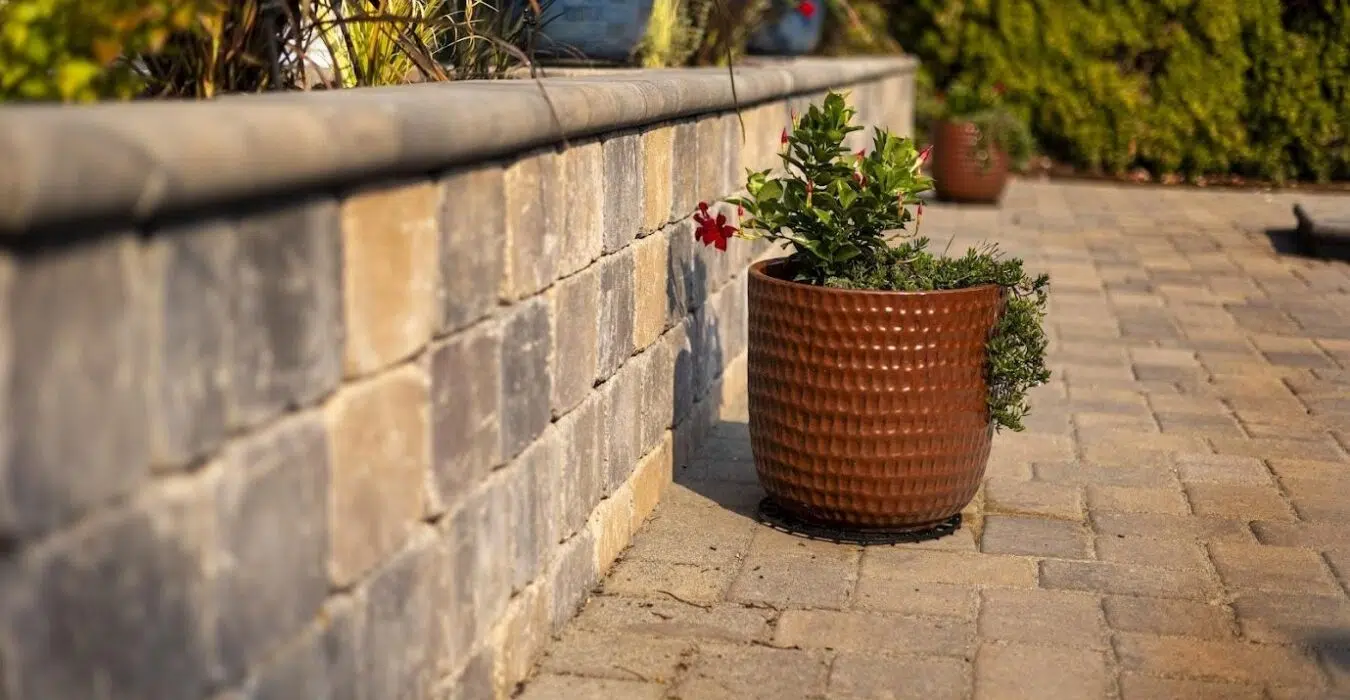
Retaining Wall Block Condition – Inspect blocks for cracks, chips, or separation at joints. Note any blocks that appear displaced or tilted.
Retaining Wall Drainage Performance – Water staining, excessive moisture, or pooling behind the wall indicate drainage issues. After heavy rain, observe how water moves through and around your wall system.
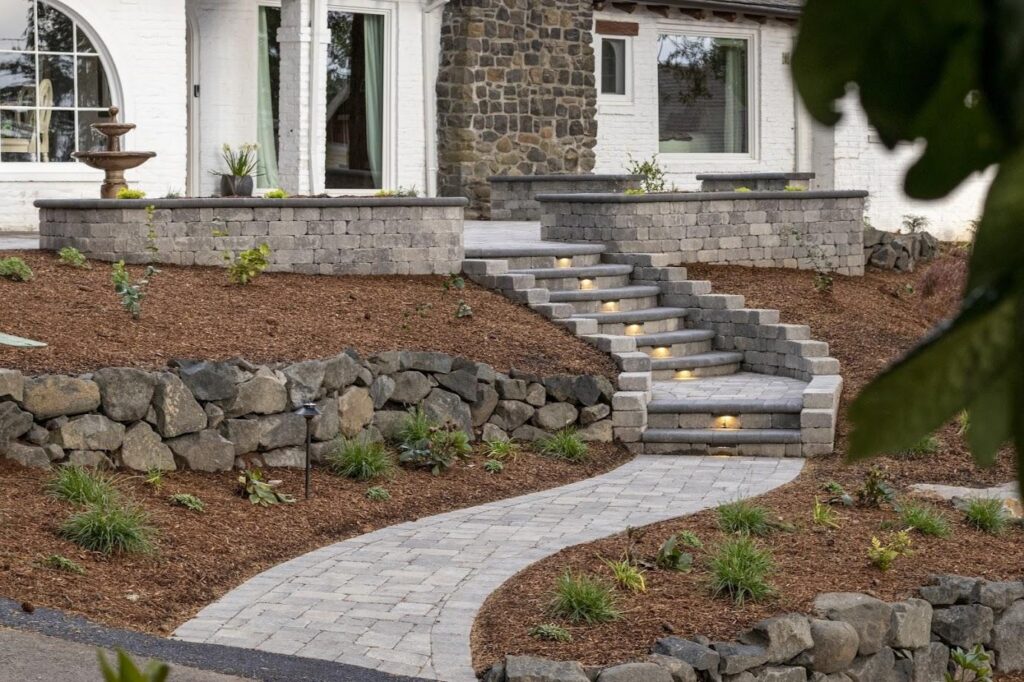
Vegetation Growth – Trees, shrubs, and weeds growing on or near the wall can cause damage. Roots penetrate joints, displace blocks, and retain moisture that accelerates deterioration.
Cap Integrity – Check that cap blocks remain securely in place. Loose caps indicate adhesive failure or wall movement.
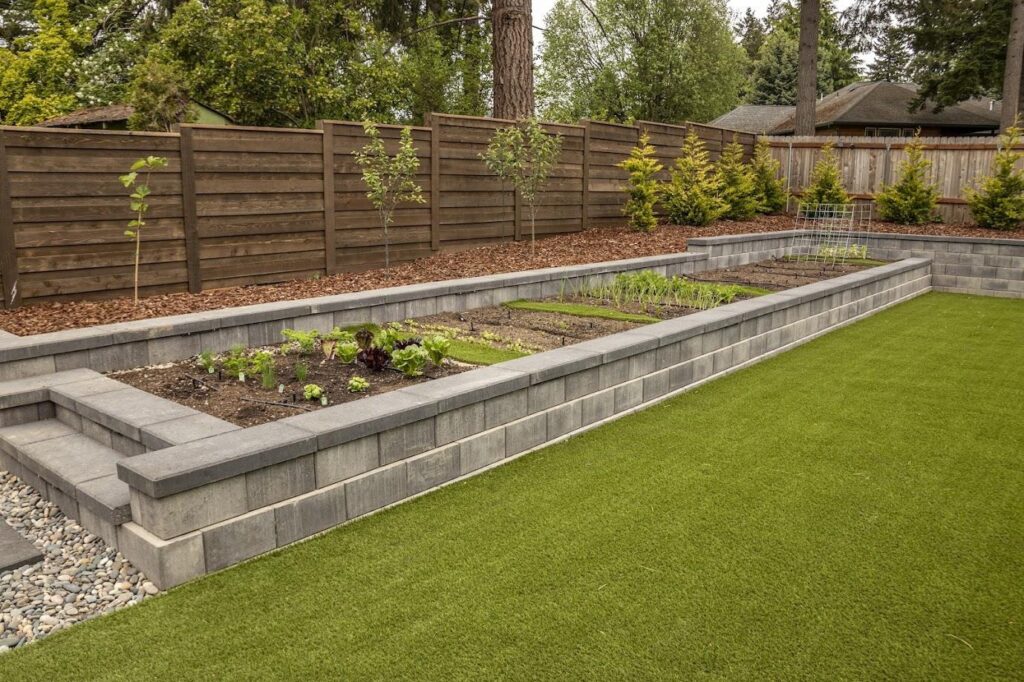
Backfill Area – Where visible, assess the backfill zone behind your wall. Settling, erosion, or standing water can indicate drainage problems or inadequate compaction.
Spring inspections catch winter damage from freeze-thaw cycles and fall inspections ensure your drainage system is clear before winter rains and identify vegetation needing removal before roots establish deeper.
Monthly Quick Checks (5 minutes)
During regular yard work, take a moment for quick visual observation. Has new vegetation appeared? Do you notice water behaving differently during rain? Quick monthly awareness often catches developing problems early.
Annual Maintenance (2-3 hours)
Deep Cleaning – Remove accumulated dirt, organic debris, and surface stains using a stiff brush and water. For stubborn staining, use diluted bleach solution or concrete-specific cleaner.
Vegetation Management – Remove all weeds, vines, and volunteer plants growing on the wall face or in joints. Cut back nearby trees and shrubs to prevent root systems from impacting the wall. Keep the area immediately behind the wall clear of deep-rooted vegetation.
Drainage System Check – Verify that drain outlets remain clear and functional. Remove debris from drain openings and check that water flows freely during rain events.
Cap Maintenance – Test cap blocks for stability. If any have loosened, reattach using appropriate flexible adhesive.
Backfill Assessment – Where accessible, check the backfill area for settling, erosion, or drainage problems. Address areas where soil has washed away or compacted excessively.
Long-Term Maintenance (Every 3-5 years)
Deep Restoration – Pressure washing (using low pressure and proper technique) can remove deep-set stains and biological growth when annual cleaning no longer achieves desired results.
Sealing for Protection – If desired for appearance or moisture protection, plan for reapplication every three to five years.
Comprehensive Structural Evaluation – Have a professional assess your wall’s structural condition, especially if it’s critical to your property’s functionality.
Accumulated Issue Resolution – Replace damaged blocks, reattach loose caps, improve drainage in problem areas, and address recurring vegetation issues.
Common Maintenance Challenges and Solutions
Surface Staining and Biological Growth
Retaining walls face constant exposure to moisture, soil contact, and organic debris, creating ideal conditions for staining and biological growth.
Algae, Moss, and Mildew – These organisms thrive in moist, shaded conditions. Beyond appearance, biological growth retains moisture that accelerates block deterioration.
Progressive Treatment:
- Level 1: Stiff brush and water for light growth
- Level 2: Water and bleach in 4:1 ratio, allow ten to fifteen minutes dwell time, then rinse
- Level 3: Low pressure washing (1500-2000 PSI maximum) with wide fan tip, keeping nozzle at least twelve inches from surface
- Level 4: Concrete-specific cleaners formulated for algae and mildew
Efflorescence – This white, powdery mineral deposit occurs when water-soluble salts migrate to the surface. Remove using dry brushing for light deposits or specialized efflorescence removers for heavier accumulation. If efflorescence returns repeatedly, investigate your drainage system.
Vegetation Management
Weeds in Joints – Remove weeds when small by hand-pulling (easiest when soil is moist). For established problems, use targeted weed killer, then remove dead vegetation. Maintaining proper joint sand reduces weed establishment.
Vines and Climbing Plants – While attractive, vines trap moisture against block faces, accelerate deterioration, obscure structural issues, and establish root systems that displace blocks. Remove vines completely, including embedded root systems.
Tree and Shrub Roots – Trees and large shrubs near walls develop root systems that impact stability. Maintain adequate separation between deep-rooted plants and your wall. As a general rule, keep trees at least as far from the wall as their mature canopy width.
Drainage Issues
Proper drainage is critical to retaining wall longevity.
Water Staining – Dark streaks or consistent moisture on the wall face indicate water isn’t draining properly. This might result from clogged drain pipes, inadequate backfill drainage, or missing drainage elements.
Pooling Behind the Wall – Standing water creates hydrostatic pressure that can cause failure. If you notice saturated soil or pooling after rain, your drainage system isn’t functioning adequately.
Basic Solutions:
- Clear drain pipe outlets and verify water flows during rain
- Remove soil or mulch blocking drainage
- Ensure downspouts aren’t directed toward the wall
- Check that the retained area slopes slightly away from the wall top
When Professional Help Is Needed: Serious drainage problems often require professional intervention. If you observe bulging, consistent excessive moisture despite cleared drains, or erosion behind the wall, consult a professional. Drainage repairs might involve excavation, drain pipe replacement, or backfill improvements beyond typical homeowner capabilities.
Minor Structural Issues
Small Cracks – Hairline surface cracks in a few blocks are generally cosmetic. Monitor these during seasonal inspections. If they widen, multiply, or penetrate through blocks, seek professional assessment.
Slight Settling – Very minor settling (less than one-quarter inch) in isolated areas may not indicate serious problems, especially in the first year after installation. Document with photos and measurements, then monitor. Progressive settling or settling exceeding one-quarter inch requires professional evaluation.
Loose Cap Blocks – If only one or two cap blocks have loosened and the wall below shows no signs of movement, re-adhering the caps using flexible adhesive typically suffices. If multiple caps have loosened or the wall face shows irregularities, this may indicate wall movement requiring professional assessment.
Tools and Products
Essential Tool Kit:
- Garden hose with spray nozzle
- Stiff-bristled brush
- Hand tools for vegetation removal
- Four-foot level for checking alignment
- Camera for documenting condition over time
- Measuring tape for quantifying changes
When NOT to DIY:
- Any signs of structural movement (bulging, leaning, significant settling)
- Drainage system repairs requiring excavation
- Wall reconstruction or major block replacement
- Tree root removal near wall structures
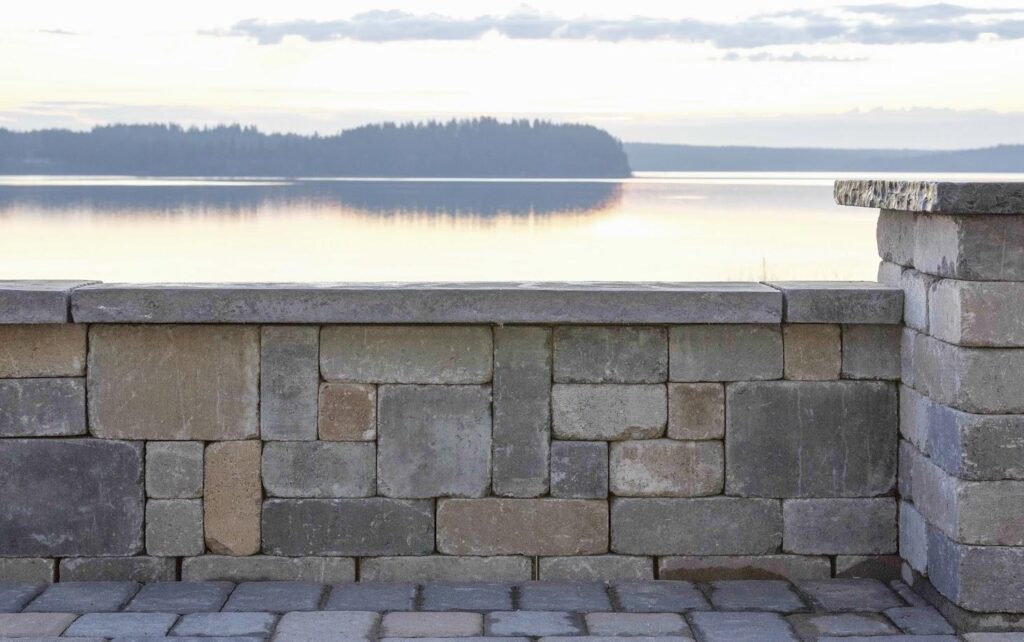
Sealing Your Retaining Wall
Sealing is optional and depends on your priorities. It enhances appearance with richer color, makes cleaning easier, and provides some moisture protection. However, it’s not necessary for wall function and adds a maintenance requirement (reapplication every 3-5 years).
Sealing makes most sense for highly visible walls where appearance matters more, walls prone to staining, or walls in high-moisture environments.
If You Choose to Seal:
- Wait at least 60 days after installation for new walls
- Clean thoroughly and allow complete drying before application
- Apply during moderate temperatures (50-80°F) with no rain expected for 24-48 hours
- Follow manufacturer instructions carefully
For detailed sealing guidance and product selection, see our comprehensive article on how to seal paving stones. To avoid common mistakes, watch our video on what not to do when sealing.
Recognizing Serious Issues
Some signs indicate problems beyond routine maintenance:
Warning Signs Requiring Professional Assessment:
- Visible bulging or bowing exceeding one-quarter inch
- Cracks wider than one-eighth inch or growing cracks
- Blocks separating or tilting
- Water continuously seeping through wall face
- Settling more than one-half inch
- Erosion behind or beneath the wall
Prevention vs. Repair Costs: Regular inspection costs almost nothing but prevents failures costing thousands. A retaining wall replacement can run $50-100 per square foot or more, while routine maintenance costs pennies per square foot annually. Address issues promptly—small problems caught early rarely become expensive repairs.
Protecting Your Structural Investment
Your retaining wall represents both functional necessity and significant investment. With proper maintenance, it performs beautifully for decades.
Key principles for success:
- Regular visual inspection is your most valuable maintenance tool
- Address small issues promptly before they compromise structure
- Understand when simple care suffices vs. when professional help is needed
- Prevention costs far less than repair or replacement
Most retaining wall maintenance is straightforward observation and basic care. You don’t need specialized skills or expensive equipment—just consistency in checking your wall’s condition and addressing problems when they’re still small.
Your retaining wall works hard every day, holding back tons of soil and managing water throughout all weather conditions. The simple maintenance practices in this guide protect that investment and ensure your wall continues providing beauty and functionality for generations.
Ready to plan your next hardscape project with confidence? Our Project Planning Guide walks you through every critical detail, ensuring your outdoor projects are built to last. Download the guide today and start your next project with the knowledge that every component will be handled correctly for beautiful, lasting results.
Get our FREE Project Planning Guide
Tell us where to send it and we’ll email the backyard planning guide to you right away!
"*" indicates required fields