
Get our FREE Project Planning Guide
"*" indicates required fields
Choosing the right pavers for your project involves more than selecting colors and patterns. One of the most practical questions homeowners ask is whether their chosen pavers can handle the intended use. Will they support vehicle traffic on a driveway? Can they withstand heavy furniture on a patio? The answer depends on paver thickness, material quality, and proper installation. Understanding paver weight capacity by application ensures you select pavers engineered for your specific needs. Whether you’re planning a simple walkway or a heavy-duty driveway, this guide explains which Western Interlock pavers work for each application and why.
What Determines a Paver’s Weight Capacity
Thickness: The Primary Factor
Thickness determines how much a paver flexes under load. When weight concentrates on a paver’s surface, the stone wants to bend. Thicker pavers resist this bending more effectively, much like a thick wooden board spanning a gap supports more weight than a thin one.
The 40mm slimline pavers lack the structural depth to resist vehicle loads. Under a car’s weight, these pavers flex excessively, cracking the paver or breaking the interlock with neighbors. Insufficient thickness cannot be compensated for through other means, regardless of material quality or base construction.
Standard 60mm thickness provides adequate rigidity to resist flexing under passenger vehicle loads when properly installed. The additional 20mm over slimline substantially increases structural capacity because strength increases exponentially with thickness, not linearly. Heavy-duty 80mm pavers add another 20mm, providing a safety margin that extends service life dramatically in demanding applications.
Material Density and Strength (PSI Rating)
Beyond thickness, the concrete’s PSI (pounds per square inch) rating measures compressive strength: how much pressure it withstands before cracking. Higher PSI concrete resists crushing under concentrated point loads more effectively.
Western Interlock manufactures pavers with premium concrete formulations achieving high PSI ratings. This matters beyond initial installation because high PSI concrete maintains integrity through thousands of freeze-thaw cycles. Denser concrete absorbs less water, reducing internal pressure when absorbed moisture freezes and expands. This connection between density, PSI rating, and freeze-thaw resistance explains why premium pavers outlast economy options by decades in challenging climates.
Shape, Interlocking Design, and Base Construction
Individual paver strength matters, but how pavers work together determines system performance. When weight presses on one paver, that stone transfers load to neighbors through interlocking joints. This load sharing explains why a proper paver system handles more weight than individual stones could support independently.
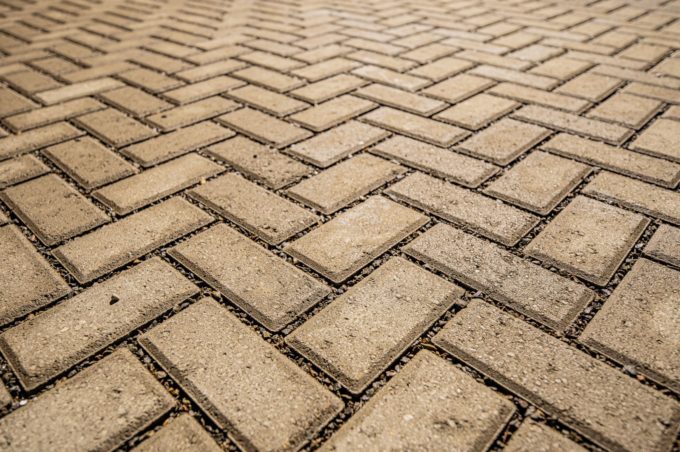
Rectangular shapes like Holland Stone create strong linear interlocks in herringbone patterns, where stones run perpendicular to traffic direction for maximum resistance to vehicle turning forces. Larger format pavers like Park and Plaza rely more on edge restraint to maintain pattern integrity. Pattern selection becomes critical because running bond works well for patios but provides less resistance to shearing forces vehicles create.
However, even perfectly chosen pavers fail without proper base construction. The base actually bears the load while pavers distribute that load to the base, which carries it to the subgrade soil. Pedestrian applications require 4 to 6 inches of compacted gravel base. Vehicular applications demand 6 to 12 inches depending on soil conditions. The base must be compacted in 2-inch lifts using ODOT 3/4-inch minus crushed rock for stability. Above the base sits a 1-inch bedding layer of coarse sand for leveling.
You cannot compensate for wrong paver thickness with better base construction. A 40mm paver on a perfect 12-inch base will still fail under vehicle traffic because the paver itself lacks rigidity. Conversely, an 80mm paver on a 3-inch base will sink because inadequate base cannot support transferred loads.
Installation Factors That Affect Performance
Installation quality determines whether properly specified pavers achieve their potential lifespan. Every exposed paver edge requires proper restraint. Commercial-grade plastic edge restraint works well for residential applications when staked securely into the base every 12 to 16 inches. Driveways require particular attention because turning vehicles create tremendous lateral forces. Without secure edges, pavers gradually spread apart, breaking the interlock and allowing individual stones to rock and settle.
After pavers are laid and edges secured, joint sand locks the system together. For driveways, polymeric sand provides superior performance, containing additives that harden when activated with water to resist washout. Joints must be filled completely and maintained annually because the interlock system requires full joints to transfer loads effectively between pavers.
Pattern selection affects load distribution. Herringbone patterns provide maximum interlock for driveways, with each paver locking against four neighbors to resist movement in multiple directions. Running bond patterns work adequately for patios but provide less resistance to vehicle shearing forces.
The most serious installation mistakes include using inappropriate thickness for the application, inadequate base construction, poor edge restraint, and skipping or neglecting joint sand. Using slimline pavers in a driveway might save initial cost, but the inevitable failure requires complete removal and replacement. There’s no fix that salvages inappropriately thin pavers. Most paver failures trace to base problems rather than the visible pavers themselves. Insufficient depth, improper materials, or inadequate compaction lead to settling and cracking regardless of proper paver selection.
Understanding Paver Load Requirements and Product Selection by Application
Pedestrian Traffic: Patios, Walkways, Pool Decks
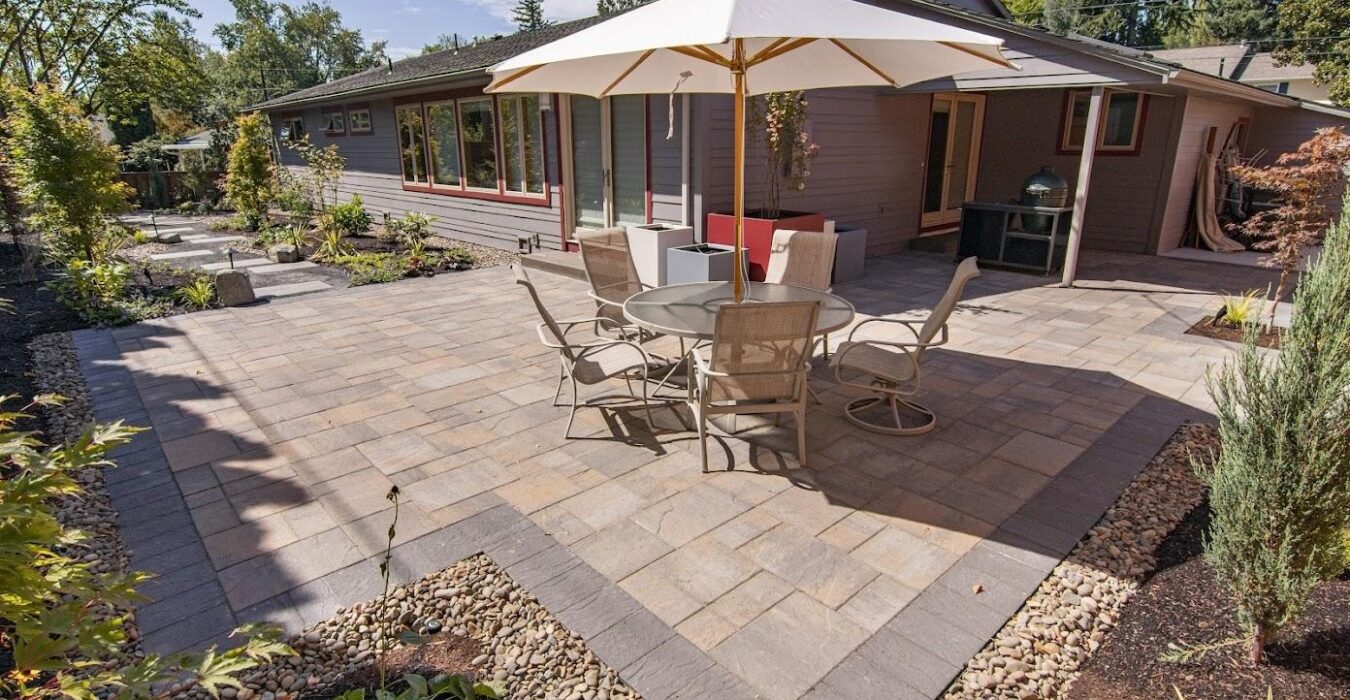
Pedestrian applications place the lightest demands on pavers. These areas experience foot traffic, outdoor furniture weight, and occasionally a wheelbarrow or hand truck. The loads distribute relatively evenly across the surface rather than concentrating in specific points. Any properly installed paver with standard 60mm (2.36 inches) thickness easily handles these conditions.
Western Interlock offers extensive 60mm options for pedestrian areas. Holland Stone provides a classic rectangular brick shape that works in countless patterns. Park & Plaza Stone, along with Arena Stone, offer larger formats that cover surface area quickly. The Leiden Collection combines five modular sizes for creative patterns. La Pietra Moderna and Milana Moderna bring contemporary smooth finishes, while Camino Stone and Cobble Park & Plaza offer traditional cobbled textures.
Budget-conscious projects benefit from 40mm slimline options. Holland Slimline and Cobble Slimline provide cost-effective solutions for pedestrian-only areas, particularly for overlays or height-restricted spaces. These thinner pavers work for foot traffic because people and furniture create distributed loads rather than the concentrated point loads that vehicles produce. Large format La Lastra pavers (50mm thickness) also serve pedestrian applications with proper installation.
Light Vehicular Traffic: Residential Driveways
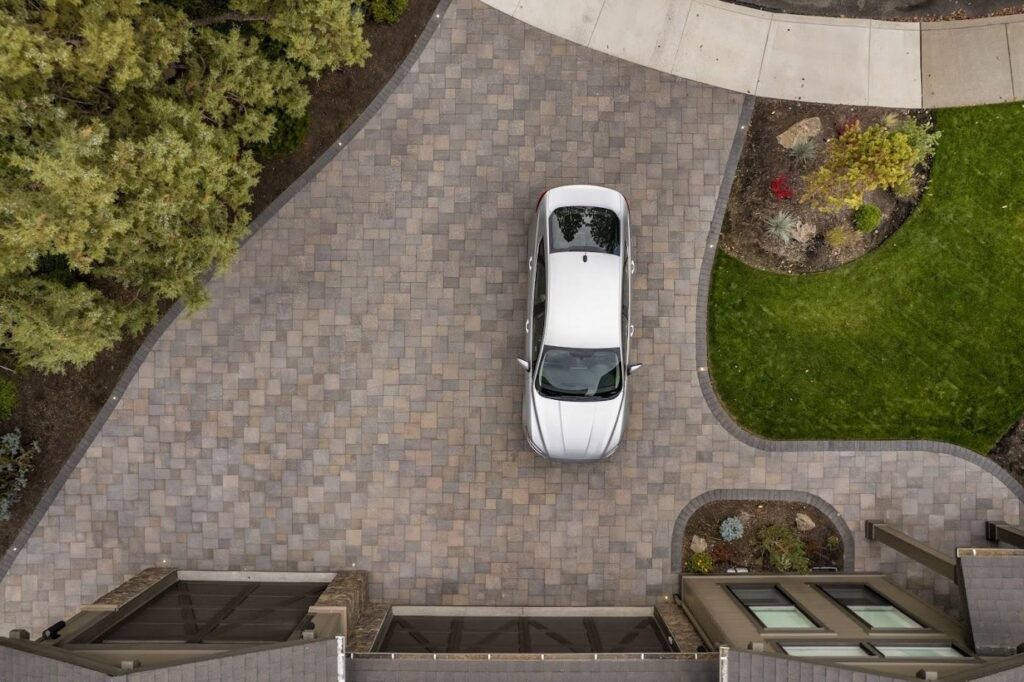
Residential driveways present substantially different demands. A typical passenger vehicle weighs 3,000 to 6,000 pounds distributed through four tires, creating concentrated point loads. Turning movements (particularly when backing out or navigating steep slopes) concentrate vehicle weight on individual pavers, creating stress that pedestrian traffic never produces. Additionally, standing water from vehicles combined with freeze-thaw cycles adds another layer of challenge.
For standard residential driveways, 60mm pavers provide excellent performance. Holland Stone, Park & Plaza Stone, and the Leiden Collection handle typical passenger vehicles effectively. La Pietra Moderna, Milana Moderna, and Camino Stone deliver both contemporary and traditional aesthetics with the strength needed for vehicle traffic.
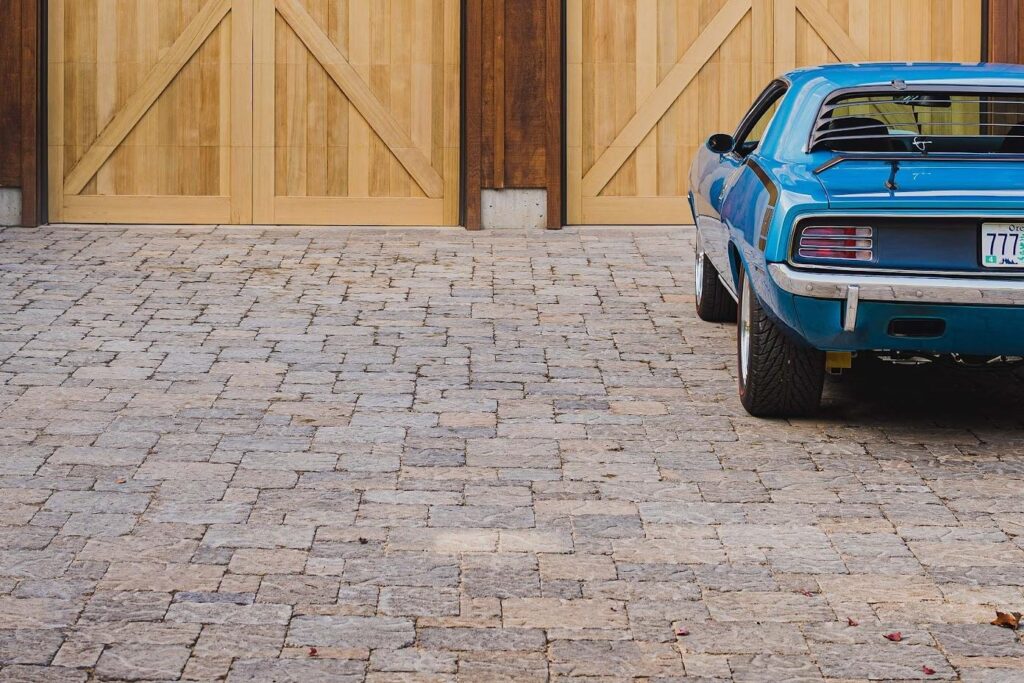
When heavier vehicles are involved (RVs, work trucks, or frequent commercial deliveries), 80mm (3.12 inches) thickness provides added durability. Milana Stone and Milana Moderna in 80mm offer both textured and smooth options engineered specifically for heavy-duty applications. Holland Stone is available in 80mm through special order. These thicker pavers resist flexing under concentrated loads more effectively and feature enhanced spacer bars for modern polymeric joint sands. Homeowners with steep driveways, tight turning radii, or heavy recreational vehicles should consider 80mm pavers a worthwhile investment.
Heavy Vehicular Traffic: Commercial and Heavy Equipment
Commercial applications require 80mm thickness as a minimum. Delivery trucks and service vehicles create loads that exceed residential standards, and frequent traffic patterns accelerate wear. A residential driveway might see two vehicle movements daily, while commercial areas experience dozens or hundreds. Each pass creates wear, and turning movements concentrate stress on specific pavers repeatedly.
Milana Stone and Milana Moderna in 80mm thickness are engineered for commercial-grade applications. Holland Stone 80mm serves applications requiring traditional brick appearance with commercial strength. These heavy-duty pavers incorporate reinforced design features that improve performance under sustained heavy loads. The cost premium reflects both additional material and commercial-grade engineering but prevents the substantial expense of premature replacement.
Special Applications
Permeable pavers maintain the same weight capacity as their standard thickness equivalents. Holland Permeare comes in both 60mm and 80mm, matching standard Holland Stone capacity while allowing water infiltration. Park Permeare and Camino Permeare similarly match their standard counterparts’ structural performance. The difference lies in installation requirements, not load-bearing capacity.

Conclusion
Understanding paver weight capacity comes down to matching thickness to application. The rules are straightforward: 40mm slimline pavers serve pedestrian areas only, never vehicle traffic. Standard 60mm thickness handles all residential applications including typical passenger vehicle driveways. Heavy-duty 80mm thickness addresses commercial applications, heavy vehicles, or situations requiring maximum durability.
These thickness guidelines assume proper material quality. Western Interlock engineers pavers specifically for their intended applications, using premium concrete formulations that achieve high PSI ratings and excellent freeze-thaw resistance. Installation quality matters equally because the strongest 80mm commercial paver will fail on inadequate base, while properly installed 60mm pavers serve a residential driveway for decades. Follow specifications for base depth and preparation, secure all edges with appropriate restraint, and maintain full joints throughout the paver field.
The result of proper specification and installation is a paver surface that serves its intended purpose for generations. Whether you’re creating an intimate patio for family gatherings or a driveway that handles daily vehicle traffic, selecting pavers engineered for your specific needs ensures lasting performance and beauty.
Ready to plan your paver project with confidence? Download our Project Planning Guide to explore design options and learn how Western Interlock’s materials create durable outdoor spaces engineered for your specific applications.
Get our FREE Project Planning Guide
Tell us where to send it and we’ll email the backyard planning guide to you right away!
"*" indicates required fields