
Get our FREE Project Planning Guide
"*" indicates required fields
There are seven elements of art that enable an artist to communicate with their audience. Those seven elements are line, shape, texture, form, space, color and value (or scale). Artists mix and match these elements to make their artwork interesting and pleasing to the eye. These visual tools also apply to landscape design. As a homeowner, you have the chance to use each element to dictate the mood of your property, guide the eye of your guests and define the space according to what will uniquely fit and enhance your home.
What do you usually think of when you imagine pavers as a feature in your landscaping? It’s true that pavers are quite capable of being boring and ordinary; an almost-plain-concrete addition to the look of your house. They also can be a delightful piece of hardscape art, or a “game room” feeling section (think life size chess board) that becomes an iconic feature of your outdoors. Which do you prefer? The options are endless.
In this blog post, we’re looking at some ways that five elements of art can apply to paver layouts, how you can implement them in your upcoming paver projects, and different paver options that you can choose from here at Western Interlock.
Element #1 – Scale Contrast
The first way you can add interest and artistic flair to your hardscape is by adding contrast with different sizes of pavers. Variation in size adds interest and can add a very particular ambiance, depending on what pavers you choose, and often if you vary color as well. Smooth, larger pavers mixed with very small ones can create a modern look; rough stones of various sizes can bring a rustic feel to your hardscape. There are several product options that can create that scale contrast:
Arena and City Square
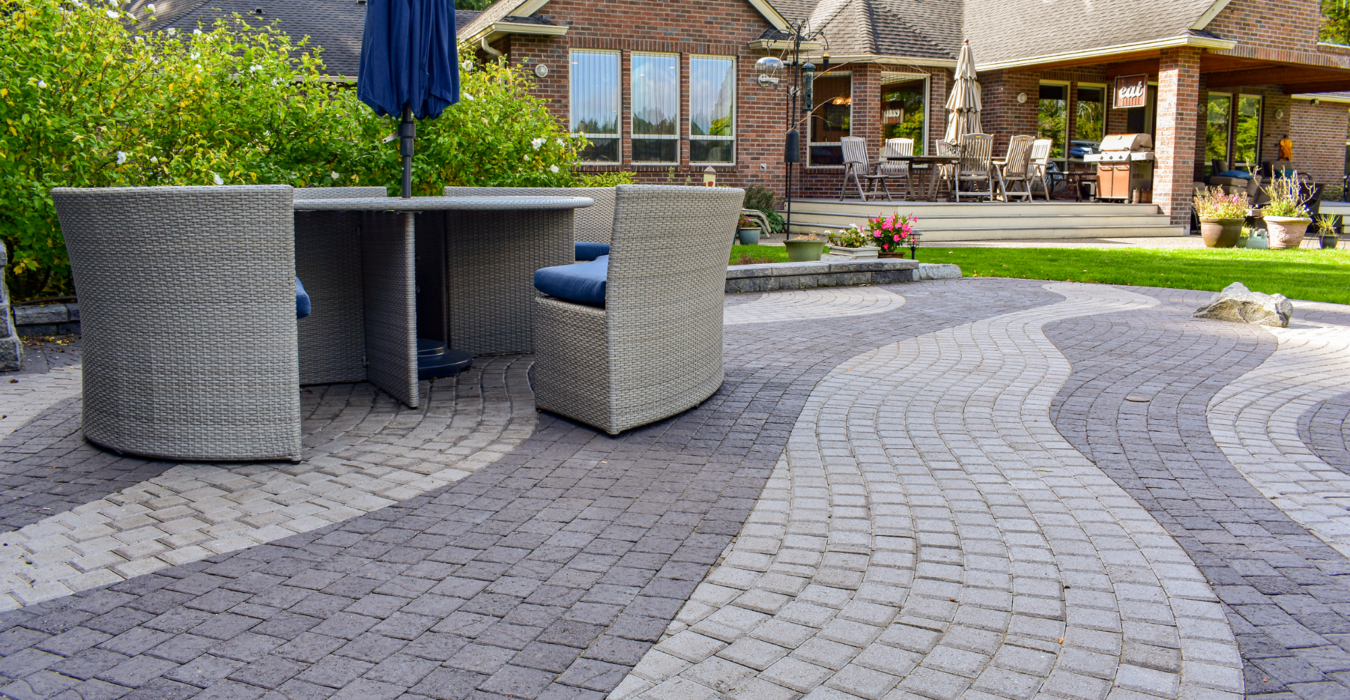
Our classic medium sized paver, Arena, pairs beautifully with our smaller City Square stone. We recommend alternating the larger Arena paver with the smaller City Square to create scale contrast in a classic linen pattern.
Double Park and Half Holland
A rectangular shaped paver, measuring 8”x16”, Double Park is often laid in a basketweave pattern with Half Holland. Half Holland is square and about 1/8 the size of Double Park. Their size difference works perfectly together to create an incredible woven effect.
Largo 18 and Holland Stone
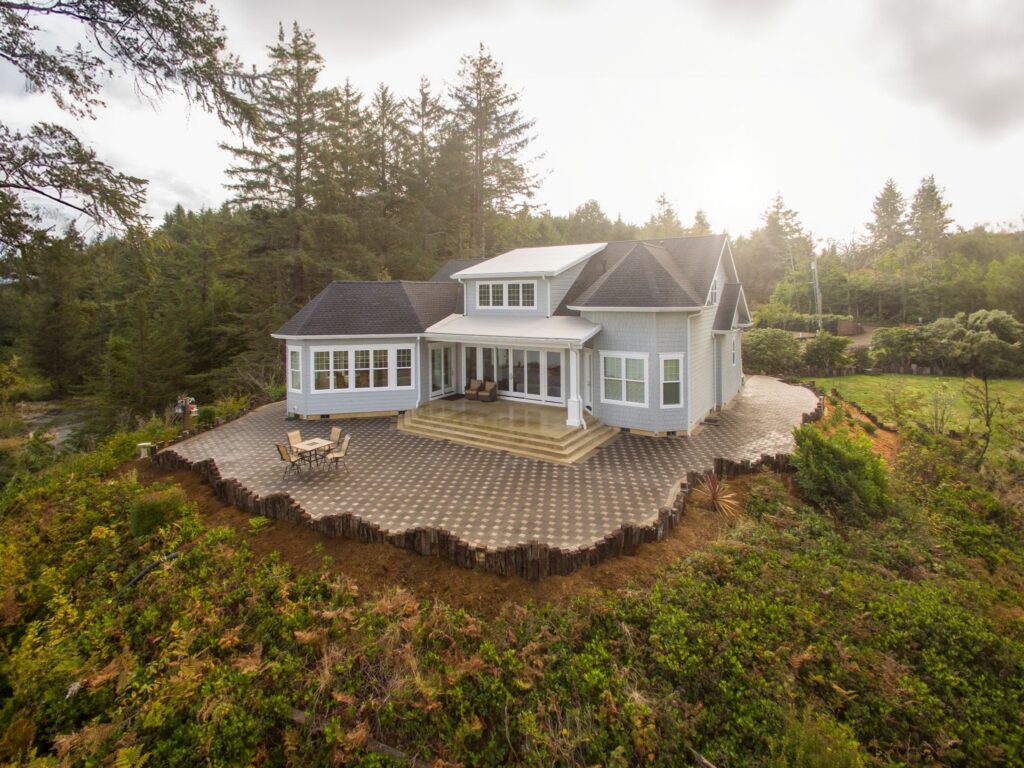
Another typical way to create scale contrast is to use one stone for the main part of your project, and another one for the project border. Largo 18 is very large, sleek style stone that is beautifully complemented by a solid Holland Stone border.
Element #2 – Shape Contrast
Another direction you can go to make your hardscape into art is by incorporating different shapes of pavers. Contrasting shapes are not always a dramatic touch, but can add significant polish, warmth, and a specific “feel” to your hardscape. There are a couple top options of shape contrast you could choose:
Cima and Roma Stone
Our Cima stone is one of our most unique, inspired by the patterns of natural stone formations. Pairing it with the hefty contrast of our Roma Stone paver will create a rough, nature inspired piece of art in your hardscape.
Roma Stone and Leiden Collection
These two paver families have a distinct contrast in shape. But laying them together creates a particularly striking effect. The natural non-directional randomness of the Roma Stones pairs well with the strong geometric structure of our Leiden Collection creating a compelling visual contrast.
Element #3 – Texture Difference
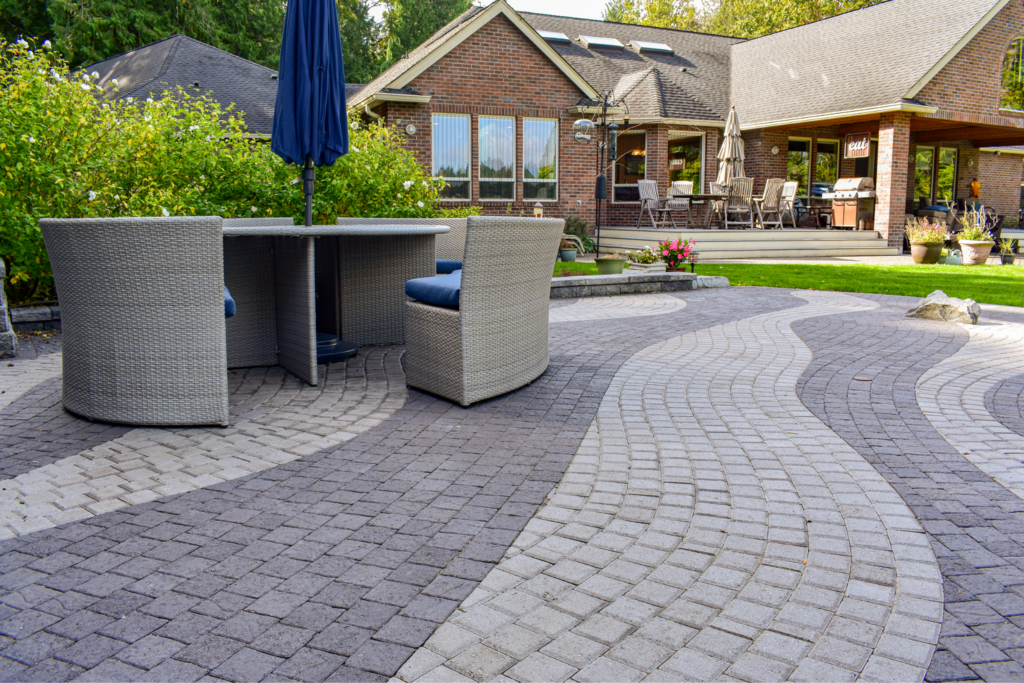
The third option for utilizing artistic elements in your hardscape is to select a couple of different surface textures. Mixing surface textures add visual depth and tactile interest to your space. A difference in surface textures can work with a difference in color, or if you want a more subtle look, keeping the color the same, but mixing up the textures is a great idea. Here are some ideas of products that are great texture pairings:
La Pietra Grande and Granite Plaza Stone
If you aren’t familiar with our La Pietra stone, it has a textured surface that mimics that look of Pennsylvania bluestone. Our Plaza Stone has a smooth surface and beveled edge. When the organic texture of La Pietra and the sleek modern surface of Plaza Stone are laid together, the difference in texture creates a striking finished look. If you want more subtlety, simply switch the roles. Use La Pietra Moderna with Granite Plaza Stone for a more contemporary look.
Cobble, Roca, Granite, and Standard Park and Plaza
If you really love the look of various paver textures together, one option for you is to lay several pavers from the same family. Our Park and Plaza family comes in four distinct surface textures. Cobble Park and Plaza, Roca Park and Plaza, Granite Park and Plaza, and standard Park and Plaza. The Cobble paver has a “worn in, but not out” look, the Roca paver has a rustic, tumbled finish, the Granite has a natural stone finish, and the standard has a smooth finish with a beveled edge. Together, the four different textures result in visual drama that’s hard to beat.
Granite and Leiden
Granite Stone and our Leiden collection both come in a five piece group and share the same family of sizes. Our Granite stone is exactly what it sounds like: designed and named after the ruggedness of granite. We suggest bordering a space filled with Leiden with our Granite Stone for a textured finished edge on your patio or other hardscape.
Element #4 – Color Variation
Perhaps the most obvious way to make something into art is by using different colors. You might think pavers are just concrete and concrete grey—but you can actually choose from a variety of colors and moods. Color instantly changes a space, particularly when it is used in combination with one of the other elements such as size or shape. There are many different directions to go as you play with color, but let’s look at a couple options:
La Lastra (Various Colors)
Like many of our pavers, La Lastra comes with several color options. You really can just choose whichever colors you like best together and make that your hardscape color theme. Because of the square shape La Lastra brings, you can easily alternate between two of its five colors to create a checkerboard pattern of two different colors.
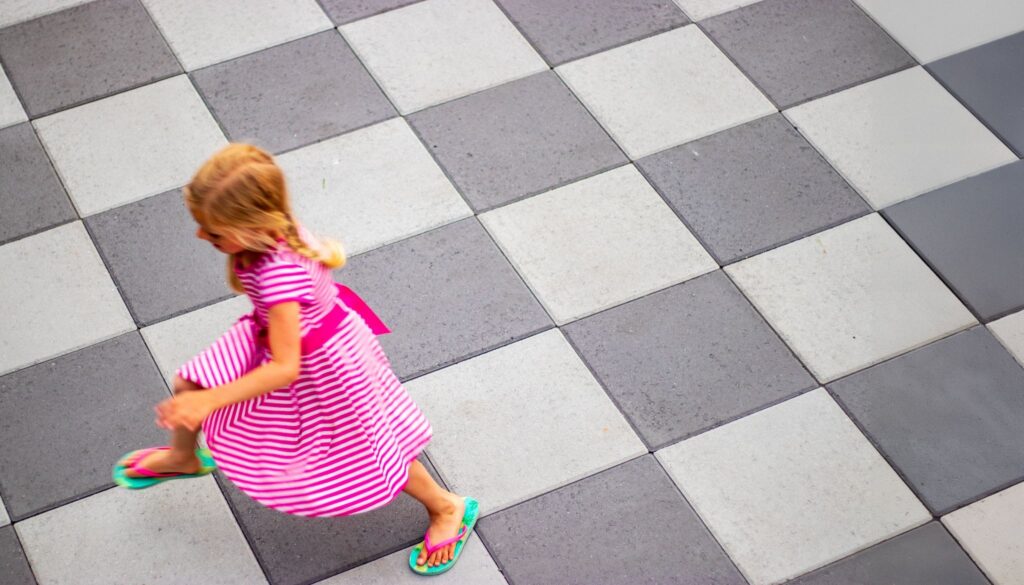
Charcoal and Pewter
The combination of charcoal and pewter colored stones is one of our most popular color variations. Create a pattern such as checkerboard, herringbone, or brickweave, in these light and dark gray tones, in almost any of our paver style options.
Element #5 – Inlays
To get really creative with your pavers, and design something very unique to your space, an inlay could be the bold choice that interests you. Inlays can be used to section off different spaces, or just to create a literal work of art in your hardscape with different meanings and themes that are important to your or the story of your family. You can make a paver inlay in a few different shapes:
Cima Stone – Flower
Our Cima stone, as you saw in the second section, is one of our most uniquely shaped pavers. You can strategically use its curving edges to actually create the shape of a flower in your patio. This could be a fun addition to a paver patio that hosts your garden boxes, especially if you did a few “flowers” in a cluster.
Compass Star
A compass star is another option for an artistic inlay you could add in your hardscape. You could make this the main feature of a patio, or create a small one so guests can actually use it to see where north and south is on your property.
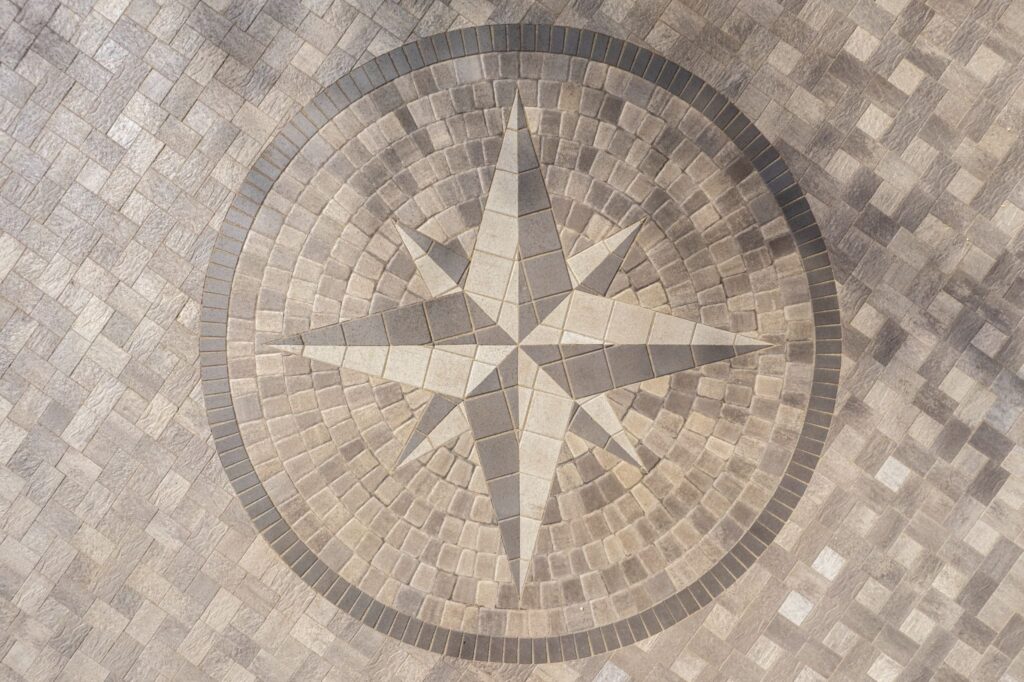
Circle
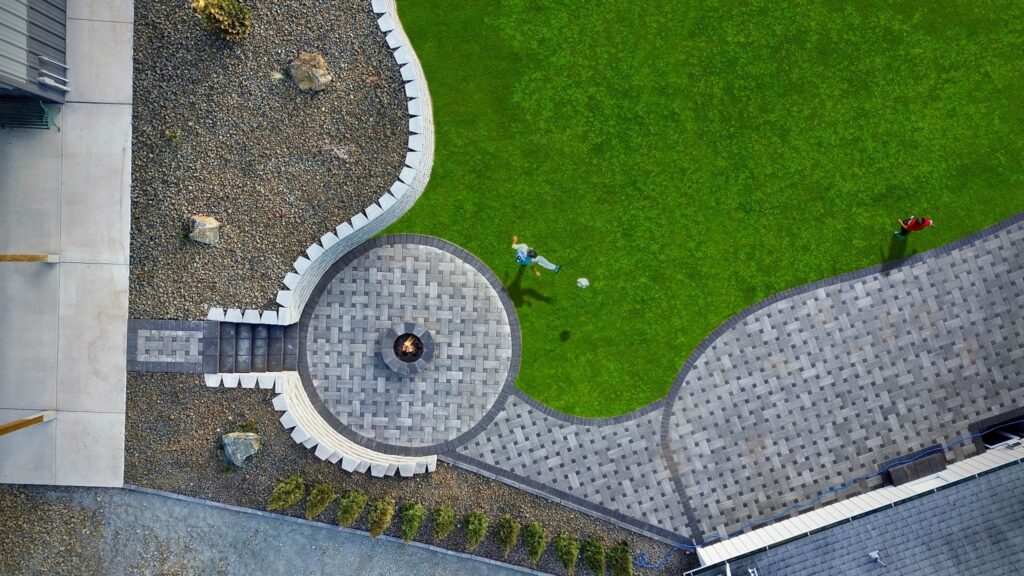
Circle systems are perhaps the most common type of paver inlay, and you’ve likely seen several. Our Cobble Rotundo Stone makes this easy, but you can get creative and use Half Holland or Villa Stone for a different look, but it will take more work. Again, this could be the main feature of a patio, or you could lay only part of your hardscape with a circle inlay, perhaps around a firepit or other gathering area.
Contact WI for tutorials and expert advice
Playing with scale, shape, texture, color, and pattern in your paver project is an incredibly rewarding way to add interest and art to your outdoors. Hardscape doesn’t need to be boring, and it shouldn’t be. Instead it can be one the primary places you show the personality of your family or home.
If you are ready to get started with installing (and sealing) your pavers, you can click here to make your choice from our hardscape selection. You can also check out our DIY with WI page for access to tutorials, and guides. Our team will be happy to assist you with any questions or custom advice you need for your installation.
Get our FREE Project Planning Guide
Tell us where to send it and we’ll email the backyard planning guide to you right away!
"*" indicates required fields