

Get our FREE Project Planning Guide
"*" indicates required fields
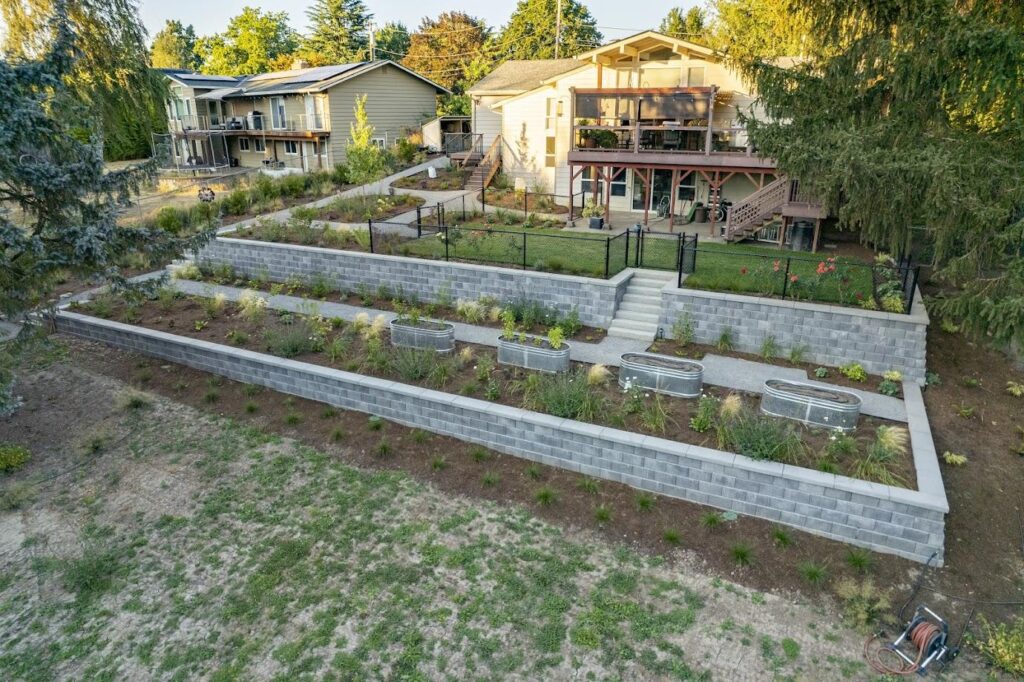
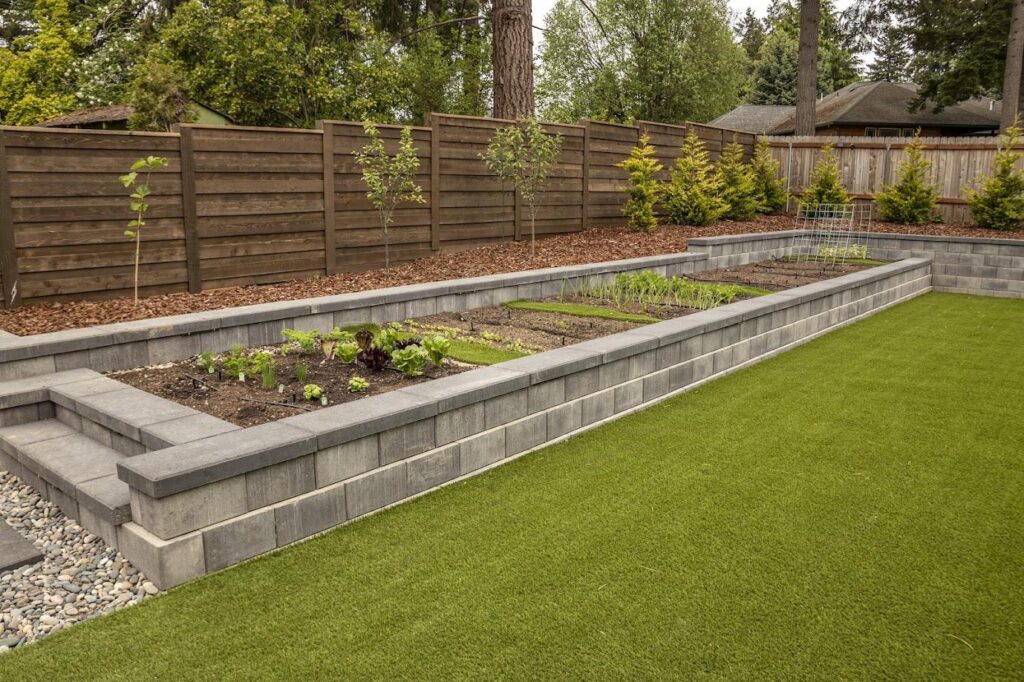
Building a retaining wall is one of the most rewarding hardscaping projects you can tackle—transforming steep, unusable slopes into beautiful, functional outdoor spaces where memories are made. Whether you’re creating a terraced garden for family gatherings or a level play area where children can safely explore, a well-built retaining wall opens up endless possibilities for your property.
The key to success lies in understanding what separates lasting installations from those that struggle. While retaining wall failures can be costly and disruptive, they’re entirely preventable when you know what to watch for. In this guide, we’ll explore the most common installation mistakes and show you how to avoid them, empowering you to create beautiful, lasting outdoor spaces that bring your family together for generations.
Understanding Retaining Wall Basics: Building with Purpose
Before diving into common mistakes, let’s go over the importance of retaining walls in your outdoor space. Retaining walls work by holding back soil while managing water effectively. The basic concept is elegant: soil naturally wants to move downhill, especially when saturated with water. Your retaining wall creates a stable barrier that redirects these forces while providing controlled drainage to maintain long-term stability.
Water management represents the most critical aspect of retaining wall design, and it’s where your attention to detail pays the biggest dividends. Proper drainage doesn’t just prevent problems, it ensures your investment continues creating value and beauty for decades to come.
If you want to learn more about the fundamentals of building a retaining wall system, be sure to check out our article on How to Build a Retaining Wall.
Mistake #1: Inadequate Foundation Preparation
The foundation represents your opportunity to set the stage for decades of success. When you invest time and attention in creating a proper foundation, you’re demonstrating the craftsmanship that transforms ordinary projects into sources of lasting pride.
Your retaining wall foundation creates the stable platform that allows your vision to flourish for generations. A properly prepared foundation distributes enormous loads across stable ground while preventing settling that could compromise your investment.
Many installations struggle because builders underestimate foundation requirements, particularly in areas with freeze-thaw cycles. Success requires proper excavation depth—typically 12 inches below ground level to accommodate a 6-inch compacted gravel base and 6 inches of embedded wall block. Your foundation trench should extend 24 inches wide for most residential applications, providing room for proper base material.
Base material selection offers another opportunity to invest in long-term success. Use ¾-minus road gravel to create the stable, well-draining foundation that allows your wall to perform beautifully year after year. Rounded materials may cost less initially, but they compromise the stability that makes retaining walls sources of pride rather than problems.
Exceptional foundation preparation begins with thorough excavation, removing all organic material and debris. Install 6 inches of compacted ¾-minus road gravel in 2-inch lifts, using a plate compactor to achieve proper density. Level the base meticulously with a screed board—this precision work becomes the invisible foundation of your family’s outdoor enjoyment.
Mistake #2: Poor Drainage Planning
Exceptional drainage transforms your retaining wall from a simple barrier into a functional water management system that protects your investment while enhancing your landscape. When you prioritize drainage from the beginning, you’re creating the conditions for your outdoor space to thrive in all weather conditions.
Outstanding drainage prevents hydrostatic pressure that could compromise your wall and maintains soil stability behind your installation. When water moves efficiently through your system, your retaining wall can focus on what it does best.
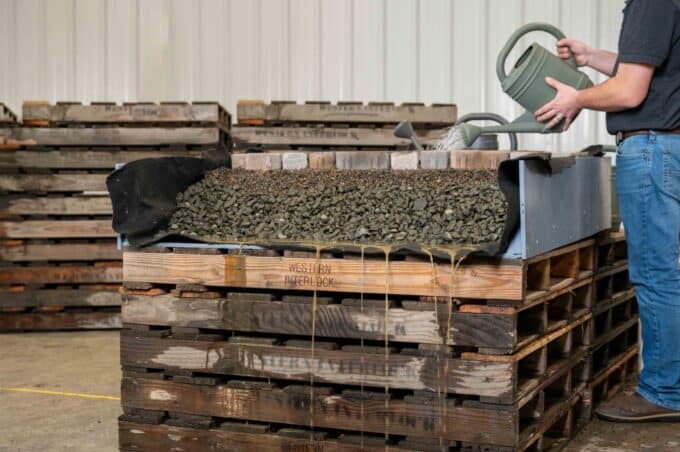
Choose drainage stone thoughtfully—clean ¾-inch crushed stone provides the rapid water movement and structural support your wall deserves. Install at least 12 inches of this premium drainage material directly behind your wall, extending from foundation to near the top.
Install perforated drain pipe at the back of your wall, properly surrounded by drainage stone and connected to an appropriate outlet. Position the pipe at grade to allow water to drain effectively, creating a system that works efficiently for decades.
Direct roof runoff and surface water away from your retaining wall area through thoughtful guttering and surface drainage. Geotextile fabric represents a small investment with tremendous returns, preventing fine particles from compromising your drainage system over time.
For more tips on retaining wall drainage, check out our video on the Essential Drainage Methods to Prevent Retaining Wall Failure.
Mistake #3: Incorrect Installation Techniques
Even with proper foundation and drainage, retaining wall blocks can fail if installation techniques are wrong. These mistakes often aren’t apparent until the wall has been under load for months or years.
Each course of retaining wall blocks must be level and properly aligned, both front-to-back and side-to-side. Small errors in early courses compound as you build higher, eventually creating stability problems. Use a torpedo level to ensure each block is level from both directions during installation.
Proper backfill compaction is essential for retaining wall stability. Add 6 inches of gravel backfill behind your blocks after each course, rake evenly, and compact thoroughly. This systematic approach prevents settling that could allow the wall to lean forward and potentially fail.
For walls over 3-4 feet high, geogrid reinforcement is often required for stability. Place geogrid between courses as you build, ensuring the 6-foot width standard covers your entire wall length. Follow manufacturer specifications exactly—shortcuts in geogrid installation can lead to catastrophic failure.
Mistake #4: Attempting Projects Beyond Skill Level
The most successful retaining wall projects come from honest self-assessment and smart collaboration. Recognizing when to partner with professionals isn’t about limitations—it’s about wisdom, safety, and ensuring your vision becomes a reality that exceeds expectations.
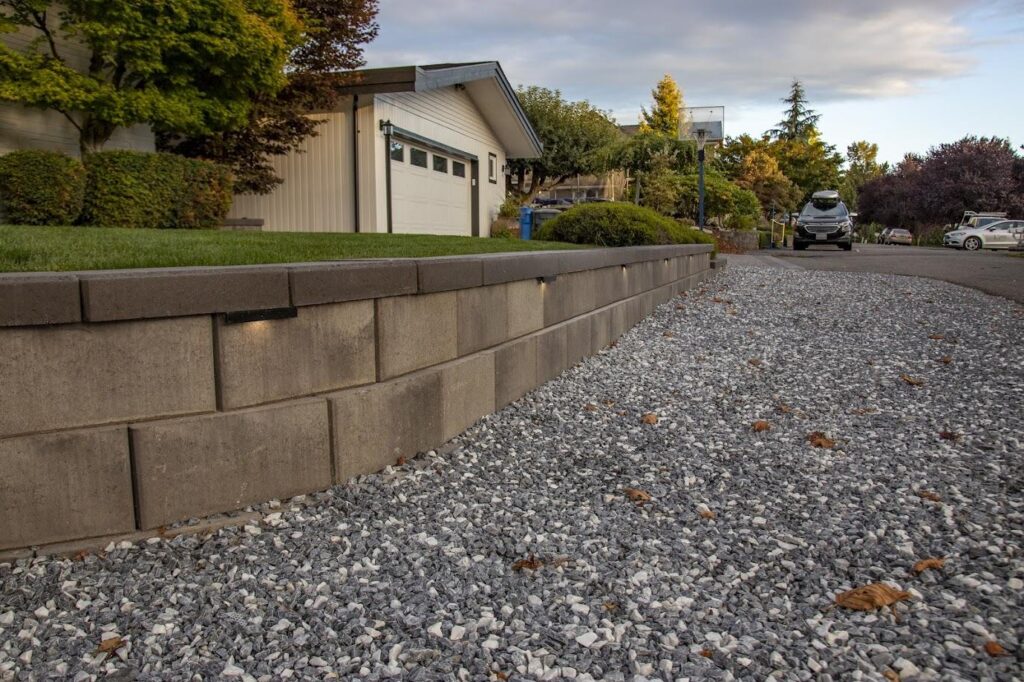
Most building codes support DIY construction of retaining walls up to 4 feet high, creating excellent opportunities for homeowners to develop skills while creating beautiful outdoor spaces. This height range allows for tremendous creativity while maintaining manageable complexity.
Walls over 4 feet enter territory where professional engineering becomes essential, not because you can’t handle the construction, but because the engineering calculations require specialized knowledge to ensure safety and code compliance. This collaboration between your vision and professional expertise often produces the most spectacular results.
Certain site conditions call for professional collaboration regardless of wall height. Steep slopes, challenging soils, high water tables, or walls supporting additional loads benefit enormously from professional design input. Local building codes vary significantly, so understanding requirements protects your investment and ensures your project adds value to your property.
Your Retaining Wall Success Story Starts Here
Building an exceptional retaining wall represents one of the most transformative projects you can undertake for your property—converting challenging slopes into beautiful, functional spaces where your family can gather, play, and create lasting memories. The most common errors—inadequate foundations, poor drainage, incorrect installation techniques, and taking on projects beyond your current skill level—are all completely preventable when you approach your project with knowledge, planning, and respect for proven methods.
At Western Interlock, we’re passionate about empowering homeowners to create beautiful, lasting outdoor spaces. Our retaining wall blocks are engineered specifically for residential applications and backed by comprehensive installation guidance that helps you achieve professional-quality results.
Whether you’re envisioning a simple garden terrace or a more substantial installation, Western Interlock provides the quality materials, technical expertise, and professional support that transform challenges into successes. Our commitment to your project extends from initial planning through final completion, ensuring your retaining wall becomes a source of lasting pride and enjoyment.
Get started today: Download our Project Planning Guide for detailed edging specifications and installation tips, or connect with our team to discuss your project needs
Because when it comes to hardscaping, we’re here to help you take the hard out of hardscaping.
Get our FREE Project Planning Guide
Tell us where to send it and we’ll email the backyard planning guide to you right away!
"*" indicates required fields