

Get our FREE Project Planning Guide
"*" indicates required fields
Standing in front of your home planning a new driveway, you’re drawn to permeable pavers for their environmental benefits—but can they really handle your family’s SUV, delivery trucks, and occasional moving van? The answer might surprise you.
Many homeowners assume permeable pavers are weaker than standard pavers because of the joint spacing, leading them to dismiss a solution that could solve both aesthetic and drainage needs. This misconception prevents property owners from considering what could be the perfect solution for their driveway requirements.
Understanding permeable paver load-bearing capabilities, knowing which specific products work best for heavy-duty applications, and recognizing the installation factors that ensure long-term success will help you make an informed decision about whether permeable pavers can handle your driveway needs.
This guide examines the engineering behind permeable paver strength, compares specific Western Interlock permeable products for driveway applications, and explains the installation requirements that maximize durability under vehicular loads.
Understanding Permeable Paver Load-Bearing Engineering
Debunking the Strength Myth
In most applications, permeable pavers have identical density and compressive strength when compared with standard pavers. The manufacturing process creates the same dense, durable concrete regardless of whether the paver will be used in permeable or standard applications. What makes a paver “permeable” isn’t reduced strength—it’s the wider joint spacing and specialized base system that manages water infiltration. Our permeable pavers at Western Interlock have increased spacer profiles, allowing for wider joints between individual pavers that promote the increased permeability.
These wider joints actually distribute loads rather than weakening the system. When weight is applied to permeable pavers, the load transfers through the interlocking system just like standard pavers. The joint spacing doesn’t create weak points; instead, it provides controlled flexibility that can actually improve long-term performance under varying loads and weather conditions.
The mechanical interlock system provides structural integrity through the same principles that make all segmental paving systems strong. Individual pavers work together to distribute loads across multiple units, preventing the concentrated stress points that cause failure in monolithic surfaces like concrete or asphalt.
Load-bearing capacity comparisons show permeable pavers meeting or exceeding the performance of traditional paving materials. Standard residential driveways experience loads ranging from 4,000-6,000 pounds per axle for typical vehicles, well within the capacity of properly installed permeable paver systems. Even occasional heavy loads like delivery trucks or moving vans fall within acceptable ranges for residential permeable installations.
The Complete Load Distribution System
Surface load transfer works through the same mechanical principles in permeable systems as standard paver installations. Vehicle weight transfers from tires through pavers to base materials, then distributes across the prepared subgrade. The wider joints in permeable systems don’t interrupt this load transfer—they simply provide additional pathways for water management.
Base course engineering for permeable systems requires specialized materials that provide both structural support and drainage function. The open-graded aggregates used in permeable base construction actually provide excellent load distribution characteristics. These materials create strong, stable foundations while maintaining the void space necessary for water storage and infiltration.
Soil support requirements remain similar to standard paving applications. The subgrade must be properly prepared and compacted to provide uniform support across the installation area. In permeable applications, soil assessment also determines infiltration rates, but the load-bearing requirements don’t change significantly from standard installations.
Traffic load classifications help determine appropriate system design. Residential applications typically fall into the lightest category, requiring base depths of 6-8 inches for adequate support. Commercial applications require deeper bases and may need specialized design, but residential permeable systems easily handle normal driveway traffic when properly installed.

Western Interlock Permeable Products: Driveway Suitability Analysis
Holland Permeare: The Proven Driveway Option
Our Holland Permeare paving stones provide full residential vehicular traffic capacity with an 8.7% open area that delivers substantial drainage benefits without compromising structural performance. The familiar rectangular proportions distribute loads effectively while maintaining the design flexibility that makes Holland Stone one of our most popular products.
Installation requirements follow standard residential driveway base construction with drainage-specific modifications. The base preparation requires open-graded aggregates instead of dense-graded materials, but the depth and compaction requirements remain similar to standard installations. This familiarity makes Holland Permeare an excellent choice for contractors experienced with traditional paving.
Performance characteristics combine proven load-bearing capacity with effective water management. The dense, durable paver construction handles vehicular traffic while the engineered joint system manages substantial rainfall volumes. This combination makes Holland Permeare ideal for family vehicles, delivery trucks, and occasional heavy loads typical of residential driveways.
Park Permeare: Contemporary Strength
Park Permeare’s square format provides excellent load distribution characteristics combined with contemporary aesthetics. The geometric shape distributes vehicle loads uniformly while the 5.9% open area provides effective drainage management for modern landscape designs.
Structural performance meets residential vehicular traffic requirements through the same engineering principles that make all segmental paving systems strong. The square format actually provides some advantages for load distribution, as the uniform shape creates consistent contact patterns under wheel loads.
The base requirements follow standard permeable installation practices with modifications for drainage function. The open-graded base materials provide excellent load-bearing characteristics while maintaining the void space necessary for water infiltration and storage.
Aesthetic considerations make Park Permeare particularly suitable for contemporary home designs where clean, geometric lines complement modern architecture. The square format works well for straight, geometric driveway layouts that emphasize architectural precision.
Camino Permeare: Traditional Appeal with Modern Performance
Our Camino Permeare features multiple size formats that distribute loads effectively while providing traditional cobblestone aesthetics. The varied sizes create a 6.7% and 5.8% open area depending on the specific product, offering good drainage performance with distinctive visual appeal.
Load distribution works through the interlocking system created by multiple paver sizes. The varied shapes provide excellent load-spreading characteristics as different sized units work together to distribute vehicle weights across the installation.
Traffic suitability meets residential vehicular requirements when properly installed on appropriate base systems. The varied surface texture and multiple sizes require careful installation to ensure uniform support, but properly executed installations provide reliable long-term performance.
Installation considerations require experienced contractors familiar with multi-size permeable systems. The varied paver sizes and surface textures demand careful base preparation and installation techniques to achieve optimal performance. This complexity makes professional installation particularly important for Camino Permeare applications.
Design applications work best for homeowners who want traditional or European-inspired aesthetics combined with modern drainage performance. The cobblestone appearance provides old-world charm while the permeable function addresses contemporary environmental concerns.

Installation Factors That Determine Success
Base Construction: The Foundation of Performance
Base construction differences between permeable and standard installations focus on material selection rather than structural requirements. In permeable systems, open-graded aggregates replace dense-graded materials to provide void space for water infiltration, but load-bearing capacity actually improves in many cases due to the excellent drainage characteristics of these materials.
Aggregate selection requires materials that provide both structural support and drainage function. The stone sizes and gradations must create adequate void space for water storage while providing stable, durable support for vehicle loads. Proper material selection is critical for achieving both drainage and structural objectives.
Compaction requirements balance density for load-bearing capacity with maintaining void space for drainage function. Specialized techniques achieve the necessary density while preserving the open structure that makes permeable systems effective.
Depth specifications for residential applications typically range from 6-8 inches, similar to standard paver installations. The depth may be adjusted based on soil conditions, expected loads, and drainage requirements, but residential applications rarely need bases thicker than standard installations.
While we always encourage a DIY approach, when it comes to creating permeable paver systems (especially load bearing), we recommend seeking professional guidance and insight to ensure your project is set up for long term success.
Professional Installation Recommendation
While we always encourage a DIY approach, when it comes to creating permeable paver systems (especially load bearing), we recommend seeking professional guidance and insight to ensure your project is set up for long term success. The reasoning is that for permeable systems, the specialized materials, techniques, and quality control measures require experience and expertise that most homeowners don’t possess.
Installer qualifications should include specific training and experience with permeable systems. The installation techniques differ enough from standard paving that general hardscape experience may not be sufficient for optimal results.
Confidence in Permeable Paver Performance
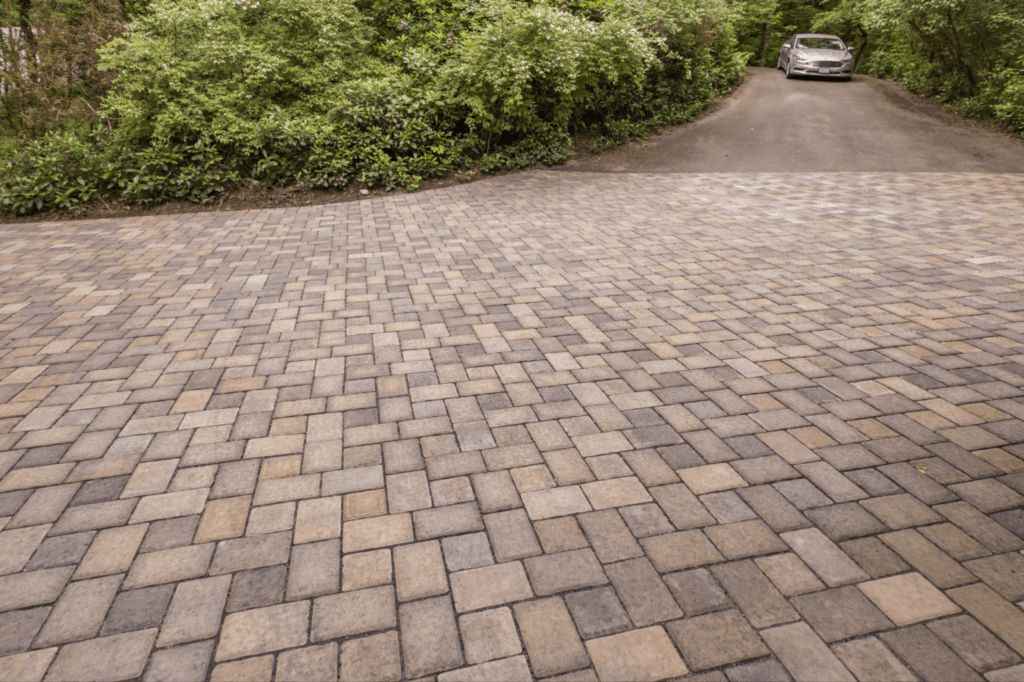
Permeable pavers can absolutely handle residential driveway loads when properly selected and installed. The key lies in understanding which products work best for your specific requirements and ensuring installation follows proven techniques for optimal performance.
The engineering reality shows Western Interlock permeable pavers offer the same structural integrity as standard pavers while providing superior drainage performance. The misconception that permeable systems are weaker stems from misunderstanding how these systems work rather than actual performance limitations.
Installation importance cannot be overstated—success depends more on proper installation techniques than inherent product limitations. The specialized materials and methods required for permeable systems demand experienced contractors familiar with these requirements.
Your driveway can provide both the durability you need for daily use and the environmental benefits you want for responsible property management. Understanding the capabilities and requirements of permeable systems helps you make confident decisions about incorporating this technology into your project.
Ready to explore whether permeable pavers are right for your driveway project? Download our free Project Planning Guide to get started on your driveway paver project. This comprehensive resource provides everything you need to move from questions to confident decisions about your project.
Get our FREE Project Planning Guide
Tell us where to send it and we’ll email the backyard planning guide to you right away!
"*" indicates required fields