
Get our FREE Project Planning Guide
"*" indicates required fields
The difference between a professional-looking paver project and a DIY disaster often comes down to one crucial detail: the edging. You can lay the most beautiful pavers perfectly, but without proper edging, your project will slowly fall apart as pavers shift, spread, and create uneven surfaces.
Here’s what many DIYers don’t realize: paver edging isn’t just a finishing touch. It’s the structural foundation that holds your entire installation together. The right edging system prevents pavers from moving, maintains clean lines, and ensures your project looks great for decades.
But with plastic, metal, concrete, and stone options available, how do you choose the best paver edging for your specific project? In this guide, we’ll break down each edging type, explain when to use them, and help you make the right choice for your driveway, patio, or walkway.
Why Paver Edging Matters More Than You Think
Think of paver edging as the invisible foundation of your hardscaping project. Without it, even perfectly installed pavers will gradually shift outward under traffic, weather, and ground movement. What starts as small gaps becomes major structural problems over time.
Proper edging provides several critical functions. It contains the horizontal forces that naturally push pavers outward, especially along the edges where there’s no neighboring paver for support. This containment is what keeps your installation tight and prevents the dreaded “paver creep” that ruins the appearance and structural integrity of your project.
The edging also maintains the sand base that supports your pavers. Without containment, base materials can wash out during heavy rains, leaving pavers unsupported and prone to settling unevenly. Quality edging creates a barrier that keeps everything in place while allowing proper drainage.
From an aesthetic standpoint, good edging creates clean, professional-looking borders that define your hardscaped areas. Whether you’re creating straight lines for a modern driveway or curved borders for a garden path, the right edging system helps you achieve and maintain the look you want.
Most importantly, proper edging extends the life of your entire project. A well-edged paver installation can last decades with minimal maintenance, while projects without adequate edging often require repairs within just a few years. It’s the difference between a successful DIY project and an expensive do-over.
Types of Paver Edging Systems: Your Options Explained
Understanding your edging options is crucial for making the right choice. Each type has specific advantages and ideal applications, and choosing the wrong one can compromise your entire project. Here are the five main paver edging systems to consider for your residential hardscaping project.
Plastic Edging: The DIY-Friendly Option
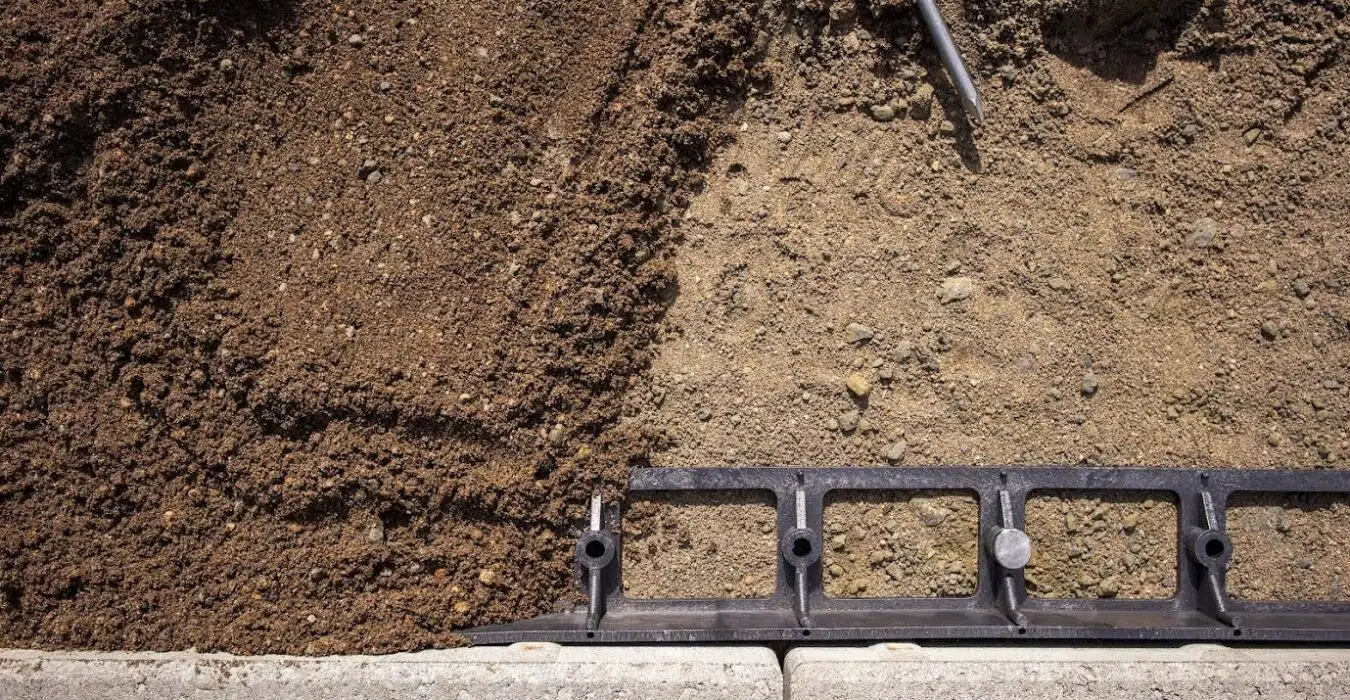
Plastic edging represents one of the most commonly utilized edge restraint systems for pavers, and for good reason. Modern plastic edging systems are made from recycled materials and designed specifically for residential paver applications.
The main advantages of plastic edging include cost-effectiveness, easy installation, and wide availability—you can likely find plastic edging options at your local landscape yard or big box store. Installation is relatively simple: pull away your bedding material, place the edging directly on top of your gravel base, and hammer in 10-inch corrosive spikes with a good-sized hammer. The spikes actually corrode and expand in your gravel for better holding power. All you’ll need for tools is the hammer and maybe a pair of snips to cut the edging to different lengths for your specific project.
However, plastic edging has important limitations. It’s not the best option if you have an open-graded base construction (like permeable paver applications) or hybrid base construction, because those stakes have nothing solid to adhere to in the gravel—they can actually move and lift during freeze-thaw cycles. Also, if you’re installing on a very hot day, make sure to cover the plastic as soon as possible because it can expand when it gets really hot.
Concrete Trowel Edge: The Traditional Choice
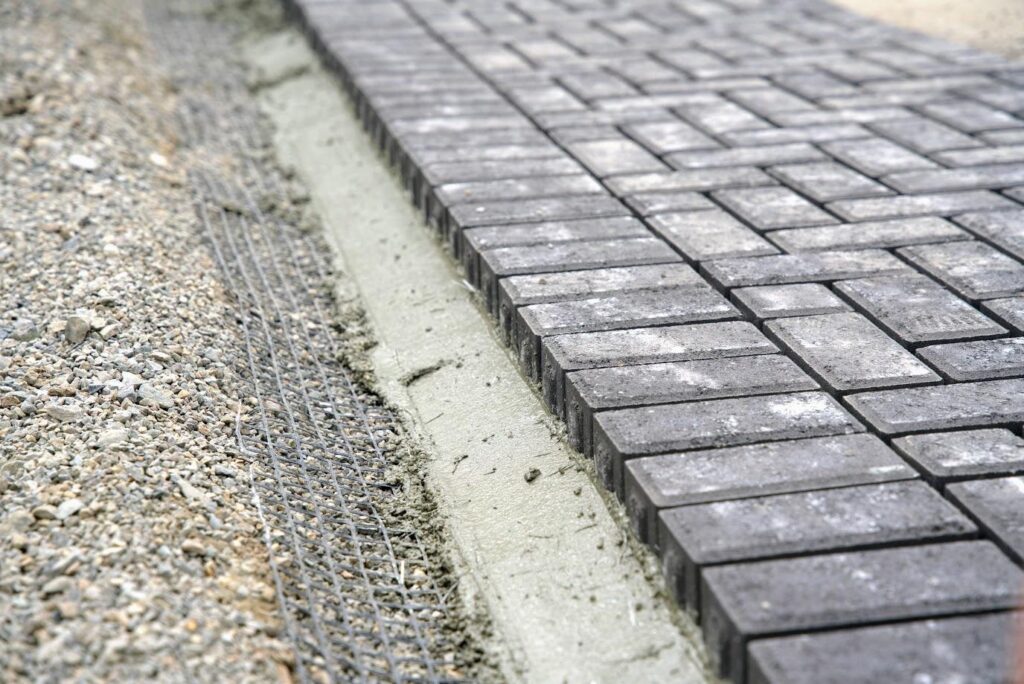
One of the more traditional forms of edge restraint for paving stones is concrete trowel edge. The advantage here is that bagged concrete is available at virtually every building supply store, and the installation requirements are relatively simple.
Installation involves scraping away your bedding material and troweling concrete directly on top of your gravel base. You want to create about a 45-degree angle and bring that concrete about halfway up your paver. When installed correctly, a concrete trowel edge can last a long time and provides solid containment for most residential applications.
The main downfall is that traditional concrete edging is susceptible to cracking through freeze-thaw cycles if your climate experiences those conditions. This makes it less ideal for regions with harsh winters or significant temperature fluctuations.
Modified Concrete Edge Restraint: The Upgraded Solution
Modified concrete edge restraint systems represent an evolution of traditional concrete edging. Products like Perma-Edge have been engineered to address the shortcomings of standard concrete while providing superior performance.
The key improvements include chemical air entrainments to make the material more permeable, non-porous aggregates to reduce susceptibility to freeze-thaw damage, and fibers that make the entire system one solid, tight piece. These systems are designed to be low-profile and easy to hide—typically only four inches wide and about 5/8 inch up from the bottom of your paver, making them very easy to conceal with landscape materials.
Installation involves pulling away all your bedding aggregates to place the material directly on top of your gravel base. The mix design is pre-established (usually one gallon of water per bucket), so there’s no guesswork about moisture content or cement ratios. This type of edging works well even with open-graded base construction for permeable pavers or hybrid base systems.
The main drawback is that modified concrete edge restraint might not be readily available in your area and can be more expensive than other options.
Bond Beam: The Professional Approach
Bond beam represents a more specialized form of edge restraint where you build a small curb underneath the edge of your paving stones. This approach offers unique advantages: the edge of your paving stones remains fully visible, and you have more room for landscape materials if needed.
The process is much more labor-intensive than other options. You’ll need to pull up your border stones, dig out a small trench, pour your concrete, and then individually reset all those border stones with mortar and a hammer. This method works particularly well if you’re doing angles or curves in your project, where having a solid border stone creates a much stronger finished edge.
While bond beam creates an attractive, professional appearance, it requires more skill and time than most DIY homeowners want to invest.
Poured Curb: Maximum Strength for Driveways
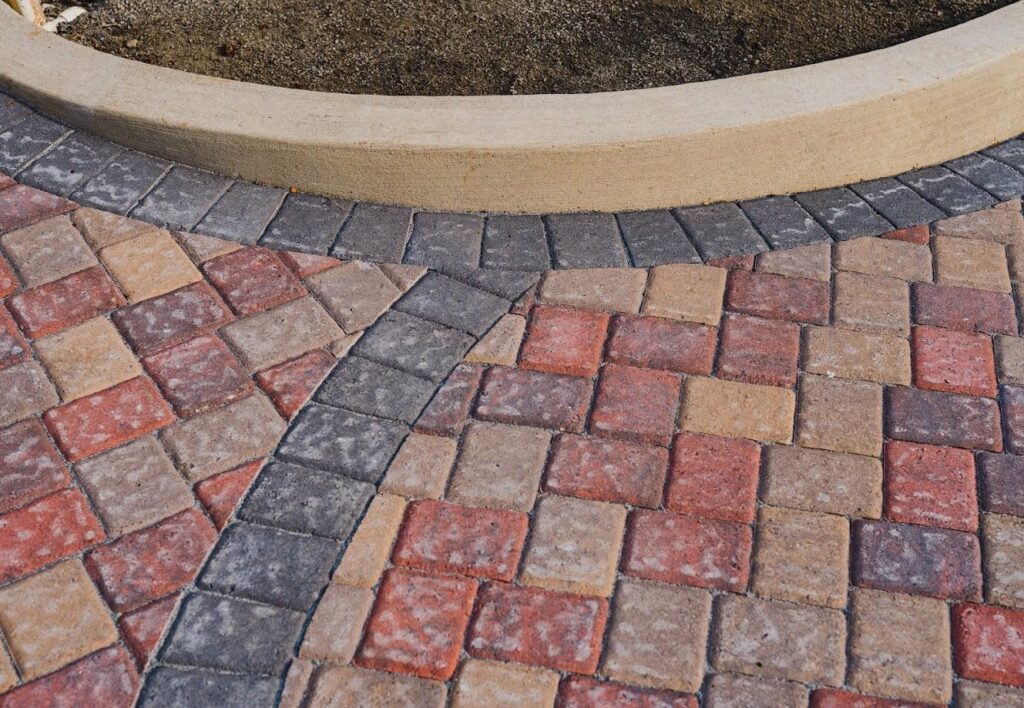
The strongest form of edge restraint for concrete pavers is a poured curb. This system is extensive, deep, heavy, and strong—which is why it’s really only recommended for vehicular driveways where maximum containment is essential.
Poured curb excels at preventing pavers from shifting under vehicle loads, making it the gold standard for driveway applications. However, it’s very labor-intensive and requires specific tools and expertise. While it can be done yourself if you have the right equipment and experience, most homeowners will want to consider hiring a contractor for this type of installation.
The investment in a poured curb system pays off in longevity and performance, especially for driveways that see daily vehicle traffic.
Matching Edging to Your Project Type
Different projects have different requirements, and choosing the right edging depends heavily on how and where your pavers will be used. Here’s how to match the best paver edging system to your specific residential project.
Driveways: Maximum Strength Required
Driveway projects demand the strongest edging systems because they must contain pavers under vehicle loads and prevent spreading from repeated traffic. The constant weight and movement of cars creates significant outward pressure that lighter edging systems simply can’t handle.
For residential driveways, a poured curb represents the gold standard—it’s extensive, deep, and strong enough to prevent any shifting under vehicle loads. While it’s labor-intensive and may require professional installation, it provides unmatched long-term performance for driveway applications.
If a poured curb isn’t feasible, modified concrete edge restraint offers excellent performance for driveways while being more DIY-friendly. The enhanced formula with fibers and non-porous aggregates provides durability through freeze-thaw cycles while maintaining the strength needed for vehicle traffic.
A traditional concrete trowel edge can work for lighter-traffic driveways, but be aware of its susceptibility to cracking in climates with freeze-thaw cycles.
Patios: Balancing Function and Aesthetics
Patio edging needs to provide adequate containment while contributing to the overall design aesthetic. Since patios are highly visible and often serve as entertainment spaces, the edging choice significantly impacts the final appearance.
Modified concrete edge restraint works exceptionally well for patio applications. Its low-profile design (only 5/8 inch up from the bottom of the paver) makes it easy to hide with landscape materials while providing solid containment. The enhanced durability ensures your patio edges will last for decades.
For smaller patios or areas where budget is a primary concern, plastic edging can provide adequate containment for foot traffic. The key is ensuring proper installation with 10-inch corrosive spikes and understanding its limitations with certain base constructions.
Bond beam offers the most professional appearance for patios where the paver edge will be highly visible, though it requires more labor and skill to install properly.
Walkways and Garden Paths: Flexibility and Functionality
Walkway edging must accommodate curves and design elements while providing adequate containment for foot traffic. Most residential walkways don’t require the heavy-duty containment needed for driveways, allowing for more flexibility in edging choice.
Plastic edging excels in walkway applications, especially for curved garden paths where you need to follow natural contours. The ability to cut it to different lengths and its flexibility make it ideal for creative pathway designs. Just remember to avoid it if you’re using permeable pavers with open-graded base construction.
Modified concrete edge restraint works well for straight walkways or areas where you want a more permanent, professional appearance. Its compatibility with different base systems makes it versatile for various walkway applications.
The key with any walkway edging is ensuring it doesn’t create trip hazards while still providing adequate containment. Proper installation depth and secure anchoring are crucial for both performance and safety.

Your Edging Decision Starts Here
The best paver edging for your project depends on your specific requirements, budget, and design goals. From budget-friendly plastic options for simple walkways to heavy-duty steel systems for driveways, the right choice ensures your paver installation performs beautifully for decades.
Remember that edging isn’t just about containing pavers—it’s about protecting your entire investment. Quality edging prevents costly repairs, maintains the appearance you worked hard to create, and extends the life of your project significantly.
Ready to choose the right paver edging for your project? Western Interlock offers the product knowledge, technical support, and installation guidance you need for success. Our team can help you evaluate your specific requirements and recommend systems that deliver both performance and value.
Get started today: Download our Project Planning Guide for detailed edging specifications and installation tips, or connect with our team to discuss your project needs. Also, be sure to check out our video on 5 Ways to Retain a Paver Edge.
Because when it comes to hardscaping, we’re here to help you take the hard out of hardscaping.
Get our FREE Project Planning Guide
Tell us where to send it and we’ll email the backyard planning guide to you right away!
"*" indicates required fields