

Get our FREE Project Planning Guide
"*" indicates required fields
When most homeowners envision their dream patio or walkway, they picture beautiful pavers arranged in stunning patterns. What they don’t see, but what makes all the difference between a hardscape that lasts decades and one that fails within years, is what happens at the edges.
Paver edges might seem like a minor detail, an afterthought once the design decisions are made. However, this component serves as the guardian of your entire hardscape investment, and nowhere is its importance more evident than in water management. Without proper edge restraint, even the most beautifully installed paver system becomes vulnerable to water damage.
Understanding the relationship between edge restraint and drainage is essential for long-term hardscape success. The right edging system doesn’t simply hold pavers in place—it protects the drainage infrastructure beneath your feet, ensuring water flows correctly and your outdoor space remains stable and functional for generations.
Understanding Paver Edge Basics
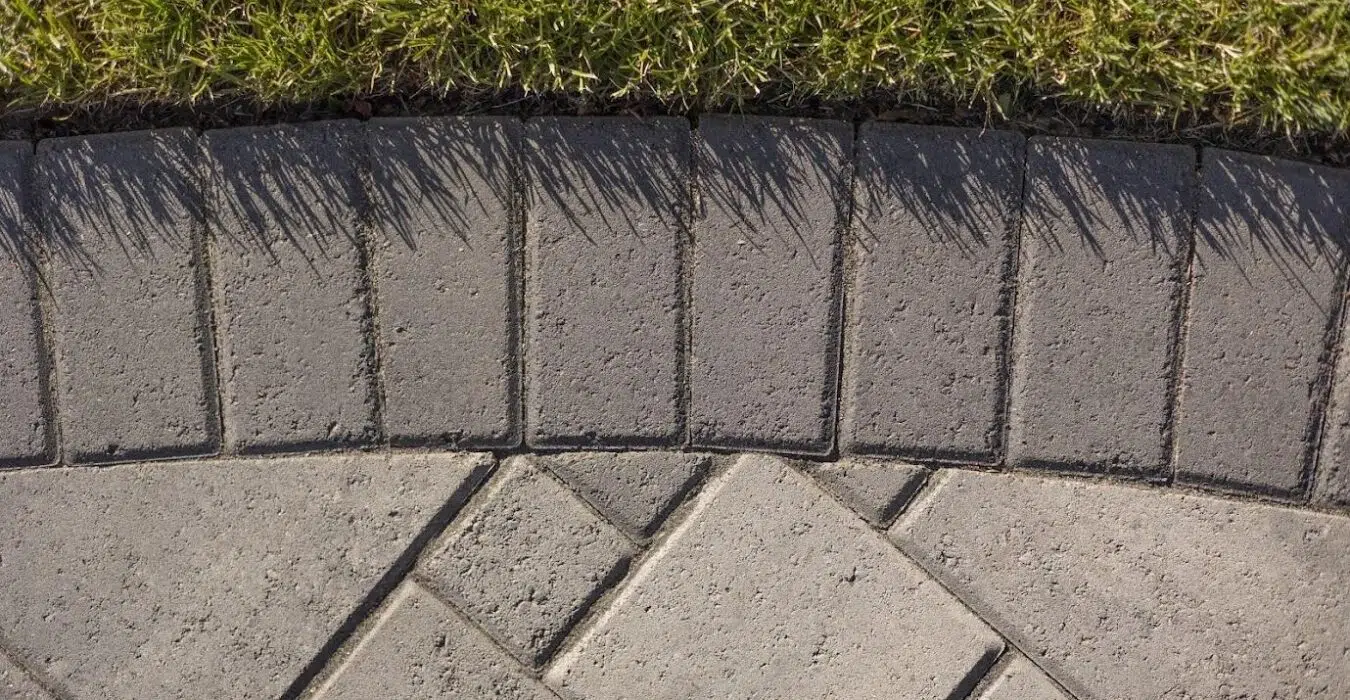
Paver edging, also called edge restraint, is the system installed along the perimeter of your hardscape to contain and secure the pavers. Edge restraint comes in several forms: plastic edging systems, metal restraints, and border stones that serve both functional and aesthetic purposes. Each option has specific applications and installation requirements. For detailed information on choosing the right type for your project, explore our article on what is the best paver edging for your project.
What matters most for water management is understanding how edge restraint functions within your paver system. Different paver edge options in various ways, but they all serve the same fundamental purpose: containing the entire paver system to prevent movement and maintain the integrity of the drainage layers beneath. Whether using plastic restraints, metal edging, or concrete border stones, proper installation ensures the edge restraint serves as the anchor point for your entire installation.
Water doesn’t just flow across your hardscape surface—it interacts with every layer of your installation. Edge restraint keeps those layers working together as an integrated system, even when challenged by heavy precipitation and seasonal moisture changes.

The Hidden Connection: How Your Paver Edge Controls Water Flow
Your paver installation is a complete water management system, not just a decorative surface. Water follows a carefully engineered path through multiple layers, each designed to move moisture away from your outdoor living space and surrounding structures.
Most installations require a minimum slope of one-eighth inch per foot across the entire project area. This grade directs water toward designated drainage points rather than allowing it to pool. The pavers shed most water immediately, but some moisture works its way into the joints between stones.
Below the visible pavers lies a one-inch layer of coarse bedding sand spread precisely level. This sand allows for minor adjustments during installation, provides cushioning that distributes weight evenly, and creates a stable setting bed. When water reaches this layer, the sand allows controlled drainage while maintaining its structural role.
Beneath the sand sits the compacted gravel base—typically four to six inches thick for pedestrian areas and deeper for driveways. This crushed three-quarter-inch-minus aggregate acts as both structural support and drainage highway. It compacts tightly enough to prevent settling while maintaining sufficient void space for water to drain freely. This base layer is the primary defense against water damage, moving moisture down and away rather than allowing it to saturate the soil beneath your pavers.
Edge restraint locks everything together, preventing movement that disrupts drainage patterns and compromises the engineered layers beneath. Your paver installation functions as a balanced system where each piece relies on surrounding pieces for stability. That stability depends on the entire assembly being contained and secured.
Without edge restraint, pavers at the perimeter have nothing pushing back against outward forces. Foot traffic, vehicle weight, frost heave, and material expansion create pressure. When that pressure has no counterforce, pavers shift.
Even small movements at the edges create problems. As pavers spread apart, the sand bedding layer loses containment and begins washing out. During rainy seasons, water flowing across the surface finds these gaps at the project perimeter. Instead of shedding water as designed, the edges become entry points where moisture infiltrates beneath the system.
Once water penetrates past the edges, it begins eroding the base material from the sides inward. The carefully compacted base starts washing away, creating voids and weakening the support structure. Pavers near the edges settle into these voids, creating an uneven surface that changes your established drainage patterns.
Low spots that form near failing edges become collection points for water. Instead of draining away, moisture pools in these depressions, saturating the base material. In freeze-prone climates, like the Pacific Northwest, this trapped water freezes and expands, accelerating deterioration through repeated freeze-thaw cycles.
This principle applies to both standard pavers and permeable systems. Permeable pavers make edge restraint even more critical because these systems rely on precise joint widths and stable positioning to maintain their designed infiltration rates. When edges fail and pavers shift, the calibrated spacing that allows water to drain through the joints gets disrupted.
What Happens When Edge Restraint Fails: What to Look For
The progression of edge restraint failure follows a predictable pattern. Initially, pavers at the perimeter spread apart, creating wider joints. The sand bedding layer loses containment, and during heavy rain, water washes sand out from beneath the pavers. Small piles of sand accumulate beyond the hardscape edge, especially near downspouts or runoff concentration areas.
Without adequate support, edge pavers settle unevenly. A barely noticeable gap becomes a pronounced low spot within a season or two. Water pools instead of draining, saturating the base material. In freeze-thaw climates, trapped water freezes and expands, lifting pavers and disrupting the bedding sand with each cycle.
The damage spreads inward. Water infiltrates through compromised edges and flows underneath the paver system, eroding base material. By the second or third wet season after edge restraint fails, pavers rock underfoot, creating trip hazards. Joint sand throughout the project washes out rapidly because the installation has lost stability.
What could have been a simple edge restraint repair becomes a major restoration project: excavating failed sections, removing settled pavers, rebuilding eroded base, and complete reinstallation. Additionally, water damage often extends beyond the hardscape. Infiltrating water flows toward foundations, saturates landscape beds, and undermines adjacent concrete. A failing patio edge near your home’s foundation can direct water toward basement walls, creating interior moisture problems. Compromised driveway edges can wash out soil beneath your garage slab, causing cracking and settling.
Maintaining Your Paver Edge Restraint System
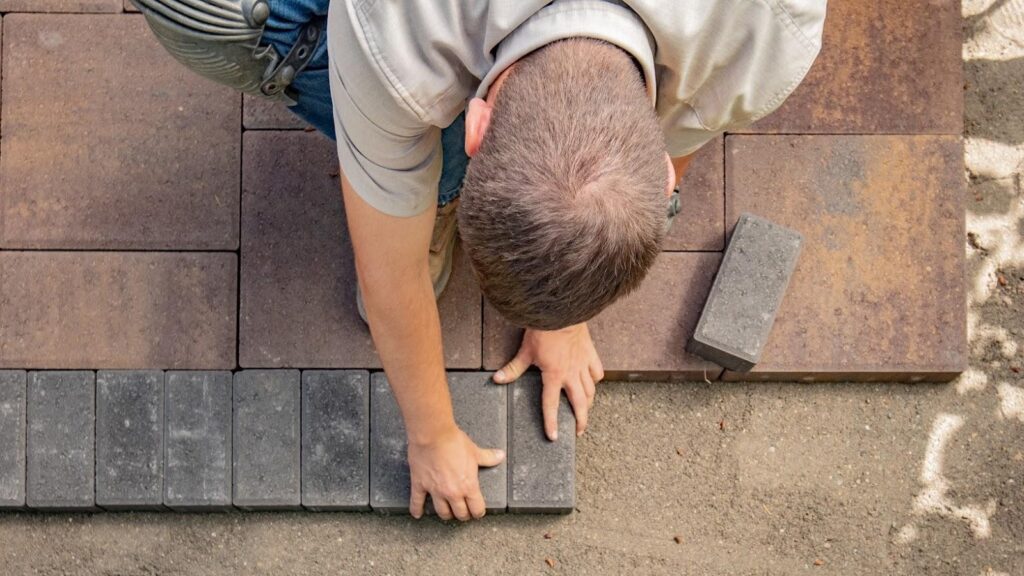
Properly installed edge restraint still requires periodic attention. Annual inspections are recommended, ideally each spring after winter weather has passed.
Look for these warning signs: visible sloughing where edge restraint has pulled away from pavers, looseness when you press on edge pavers, or visible gaps where pavers have spread apart. Pay special attention to corners, curves, and transitions, as these stress points typically fail first. Also inspect areas near downspouts or where water concentrates.
Simple fixes often address minor issues. Loose stakes can be reset or replaced. Edge restraint that has lifted slightly can be repositioned and re-staked. However, if pavers have settled significantly, the base material has likely eroded and needs professional rebuilding. Widespread movement may indicate underlying drainage or soil problems requiring a more specific diagnosis.
Connect edge restraint inspection to your overall paver maintenance routine. When cleaning pavers and checking joint sand levels, inspect your edges. Healthy edge restraint protects joint sand from washing out, while full joints reduce water infiltration that could undermine edges.
Small Detail, Major Impact
Paver edge restraint serves as the foundation of your water management system, the anchor keeping everything functioning as intended. Without it, even the most carefully graded, expertly installed paver system becomes vulnerable to water, weather, and time.
A properly installed and maintained edge system works so effectively that you rarely have to think about it. Water drains cleanly, pavers stay level and stable, and your outdoor space performs as expected season after season. It’s only when edge restraint fails that you discover how much depends on this barrier.
In regions where water management presents ongoing challenges, treating edge restraint as foundational rather than optional is essential for long-term success. Wet seasons, freeze-thaw cycles, and various soil conditions test every aspect of hardscape installations, and edge restraint stands as the first line of defense.
Most importantly, proper edge restraint provides confidence in your hardscape project. You can enjoy your outdoor living space knowing that beneath the beautiful surface lies a complete system designed to handle challenging weather conditions. Water drains correctly, bases stay stable, and your pavers maintain their position and appearance through countless seasons of use.
Ready to plan your hardscape project with confidence? Our Project Planning Guide walks you through every step of the process, from vision to execution, ensuring your outdoor space is built to last for generations. Download the guide today and start your project with the knowledge that every component, including the edges that hold everything together, will be handled correctly for beautiful, lasting results.
Get our FREE Project Planning Guide
Tell us where to send it and we’ll email the backyard planning guide to you right away!
"*" indicates required fields